Traditional Brickwork Repairs and Restoration in Yorkshire
Heritage Bricklaying for Period & Listed Buildings
Heritage Bricklayers and Traditional Brickwork Repairs in Yorkshire
The Elms, Garforth — Gable and Chimney Rebuild
Watch the 58-second project video: render removal, hot lime brickwork, lintel installation and the completed chimney.
If you need a heritage bricklayer or traditional bricklayer in Yorkshire for brick repairs with lime mortar, brick restoration or local rebuilding, The Yorkshire Lime Company can help. We work on period homes, listed buildings and other traditionally built properties, using compatible materials and repair methods that respect the existing fabric.
Our heritage bricklaying service includes local brick repairs, matching brick replacement, lime mortar repointing and careful rebuilding of damaged brickwork, including gable wall rebuilding and local house wall rebuilding. We also repair brick arches, decorative courses and masonry around windows and doors, assessing the cause of deterioration before deciding what needs to be done.
Every brick repair project is different. The age and type of brick, its condition, the original mortar, exposure and any earlier alterations all affect the approach. We aim to retain sound historic material and match repairs in their physical properties as well as their colour, texture, size and joint finish.
As heritage building contractors, we work with homeowners and project teams to understand the building and agree a suitable scope. Whether you have crumbling Victorian brickwork, eroded mortar joints or a local area needing reinstatement, contact us to discuss an assessment and the options for repair.
Traditional Bricklayers Using Lime Mortar
Historic brickwork needs an understanding of the way the wall was built, the materials used and the causes of decay. Our heritage bricklaying contractors undertake traditional structure repairs and brickwork restoration across Yorkshire, with an approach based on retaining sound original fabric and making compatible repairs.
Modern cement-rich mortars can be too strong or insufficiently permeable for softer historic bricks. Where they restrict drying through the joints, moisture and salts can contribute to deterioration of the masonry. We assess existing pointing before recommending removal: unnecessary or aggressive work can damage brick edges and remove sound historic mortar.
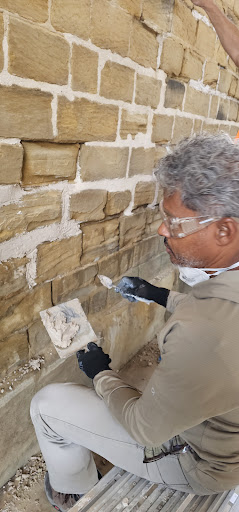
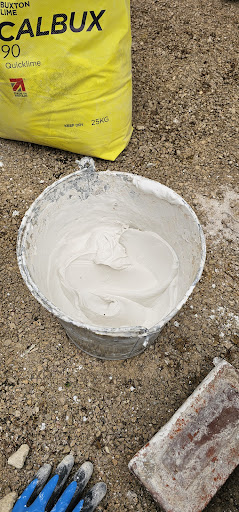
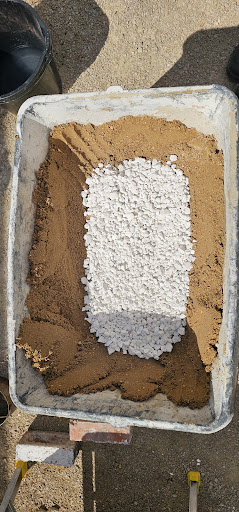
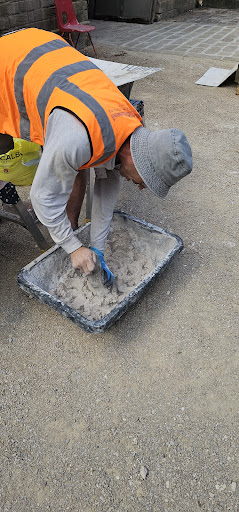
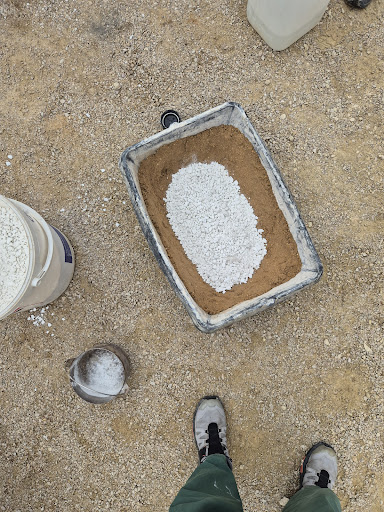
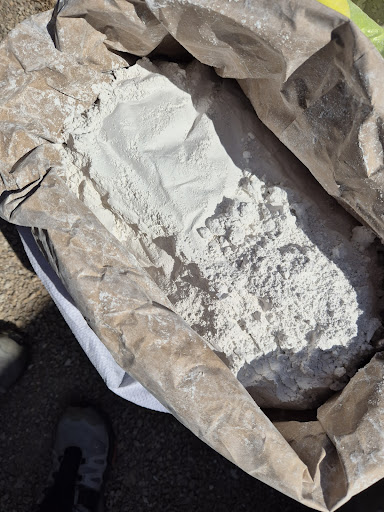
We use suitable hot-mixed air lime and lime putty mortars for traditional above-ground brickwork repairs, with the binder and aggregates selected for the building and the work required. Matching the colour alone is not enough. The mortar also needs appropriate moisture-handling properties and a joint finish suited to the existing brickwork.
Many Yorkshire buildings include dark ash mortars and fine joints, particularly in Victorian brickwork. Coal grit, fuel ash and quicklime were used in historic mortars, but the composition and joint widths vary between buildings. Repair should follow evidence from the existing work rather than apply one assumed Victorian recipe everywhere. Where needed, closer examination or mortar analysis can help inform the specification.
Careful preparation, application, curing and protection matter alongside the choice of lime. For more detail about our approach to joint repairs, see our hot lime pointing service.
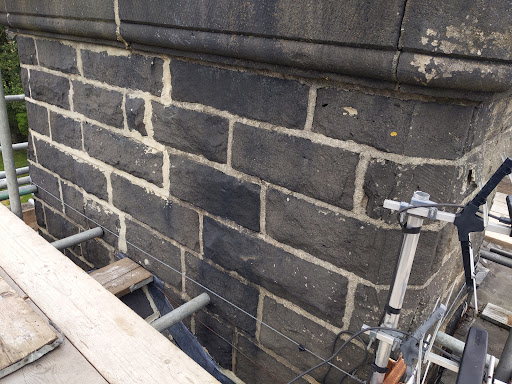
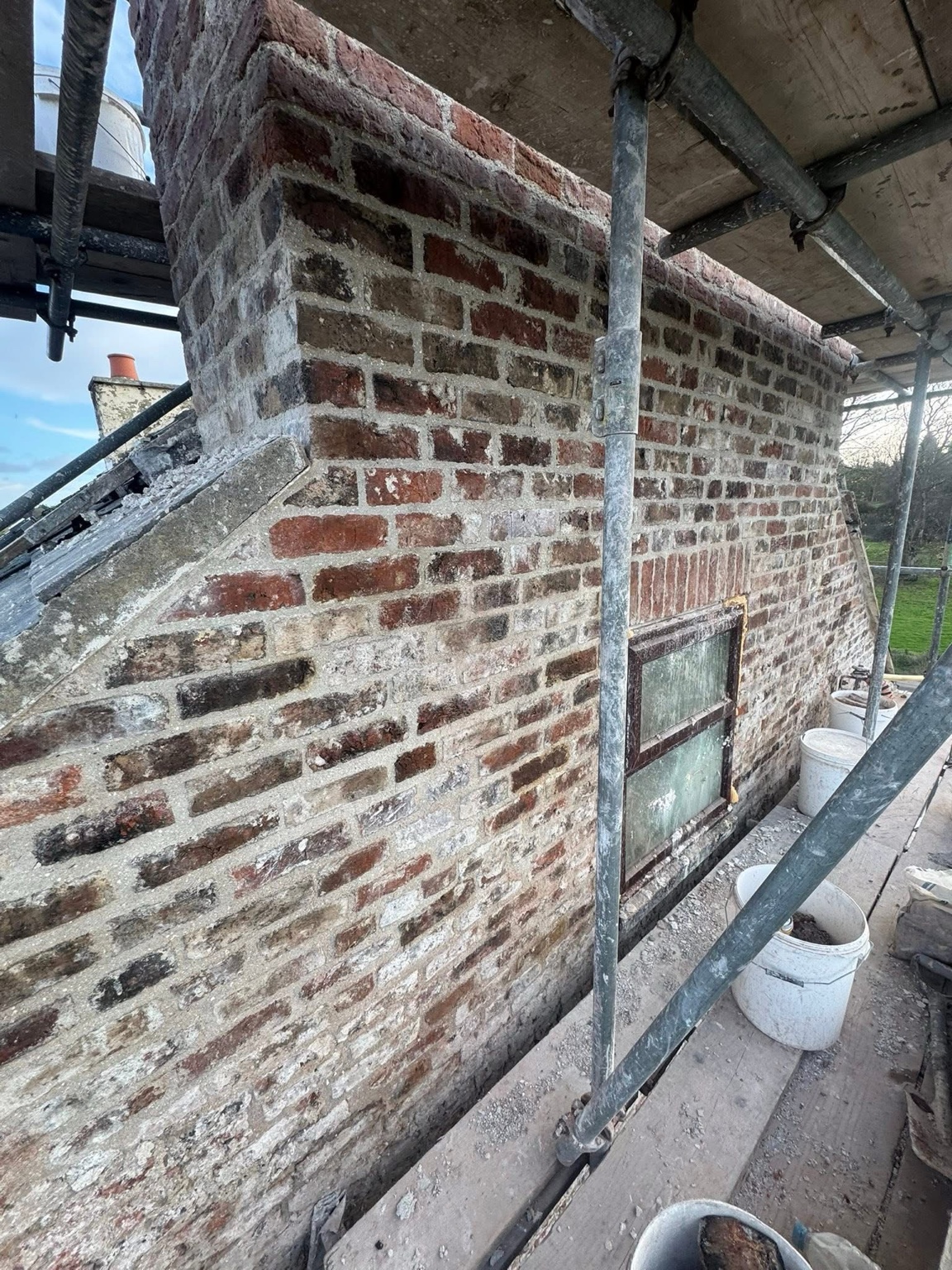
At The Elms in Garforth, our work included render removal, rebuilding the brick gable and chimney, and lintel installation. The photograph shows the gable brickwork during the rebuilding work.
Brickwork Restoration
Our brickwork restoration service covers the repair and conservation of existing masonry. We consider the extent of damage, the condition of neighbouring bricks and mortar, and whether problems such as leaks, incompatible pointing or alterations are contributing to deterioration.
Sound bricks should remain in place wherever practicable. Local surface repairs, reuse of suitable original bricks, matching replacements or careful rebuilding may be appropriate in different circumstances. Reversing a damaged brick is an option only where its condition and the construction detail make that suitable; it is not a standard treatment for every eroded face.
Gauged and Rubbed Brickwork
We also undertake gauged brickwork repairs, including carefully fitted brick arches and decorative details. Gauged brickwork uses bricks cut or rubbed to precise shapes, laid with very fine joints. Repair needs particular care to preserve the original profiles, brick edges and joint widths.
We assess the existing bricks and mortar before agreeing a repair. Matching the brick type, shape and finish is as important as selecting the jointing material; lime putty or a suitably fine lime mortar may be appropriate to the original detail. Sound gauged work is retained wherever practicable, with local replacement or rebuilding limited to what is required.
The tabs below explain our brickwork services, including traditional bricklaying, repointing, brick repairs and replacement, gable rebuilding, lintels, window reveals, creating and bricking up openings, boundary walls and chimney rebuilding. These services form part of our wider conservation masonry work. We discuss the repair requirements and likely scope before providing a quotation.

We undertake traditional bricklaying with lime mortar across Yorkshire, including new sections of brickwork, rebuilding and work to existing period properties. We select bricks and mortar to suit the construction, matching the bond, joint width, colour and texture where new work meets historic masonry.
Our bricklaying work includes garden and boundary walls, gable and house-wall rebuilding, window reveals, infilling redundant openings and reinstating decorative brick details such as soldier and dentil courses. The layout, support and repair sequence are agreed before work starts, with structural advice where required.
At The Elms, Garforth, reclaimed brickwork was rebuilt using hot lime mortar as part of the gable, window-opening and chimney repairs. Explore the project to see the work in progress and the completed masonry.
Find out more about our lime mortar pointing, lintel installation and wider heritage building services, or contact us to discuss your bricklaying work.
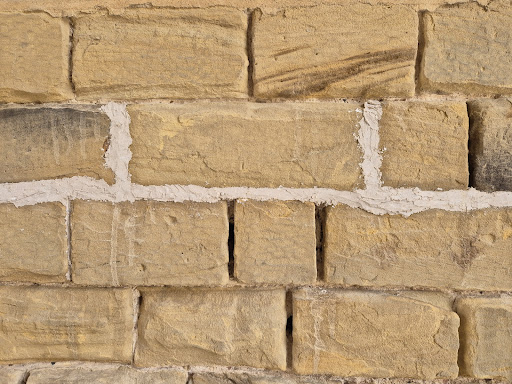
Brick repointing renews defective mortar at the exposed face of the joints. We assess the condition of the mortar and bricks first, retaining sound historic pointing and carrying out local repairs where these are sufficient.
Where incompatible cement pointing needs removal, careful preparation helps protect the brick edges. The replacement lime mortar, joint profile and curing are selected to suit the building. See our lime mortar pointing service for examples of hot lime, earth and lime, and lime ash mortars.
Photographs: archway repointing in Market Weighton; hot lime pointing at Westgate Unitarian Chapel; and lime pointing in Drax, North Yorkshire.


Brick repairs with lime mortar can include local joint repairs, replacing individual damaged bricks and, where suitable, carefully limited surface repairs. We assess the cause and depth of deterioration before selecting the method, aiming to retain sound original brickwork.
For suitable surface repairs, compatible repair mortars can be trialled for colour, texture and behaviour. Extensive face loss, structural damage or unsuitable previous repairs may require matching brick replacement instead. A surface patch should not conceal an unresolved moisture or movement problem.
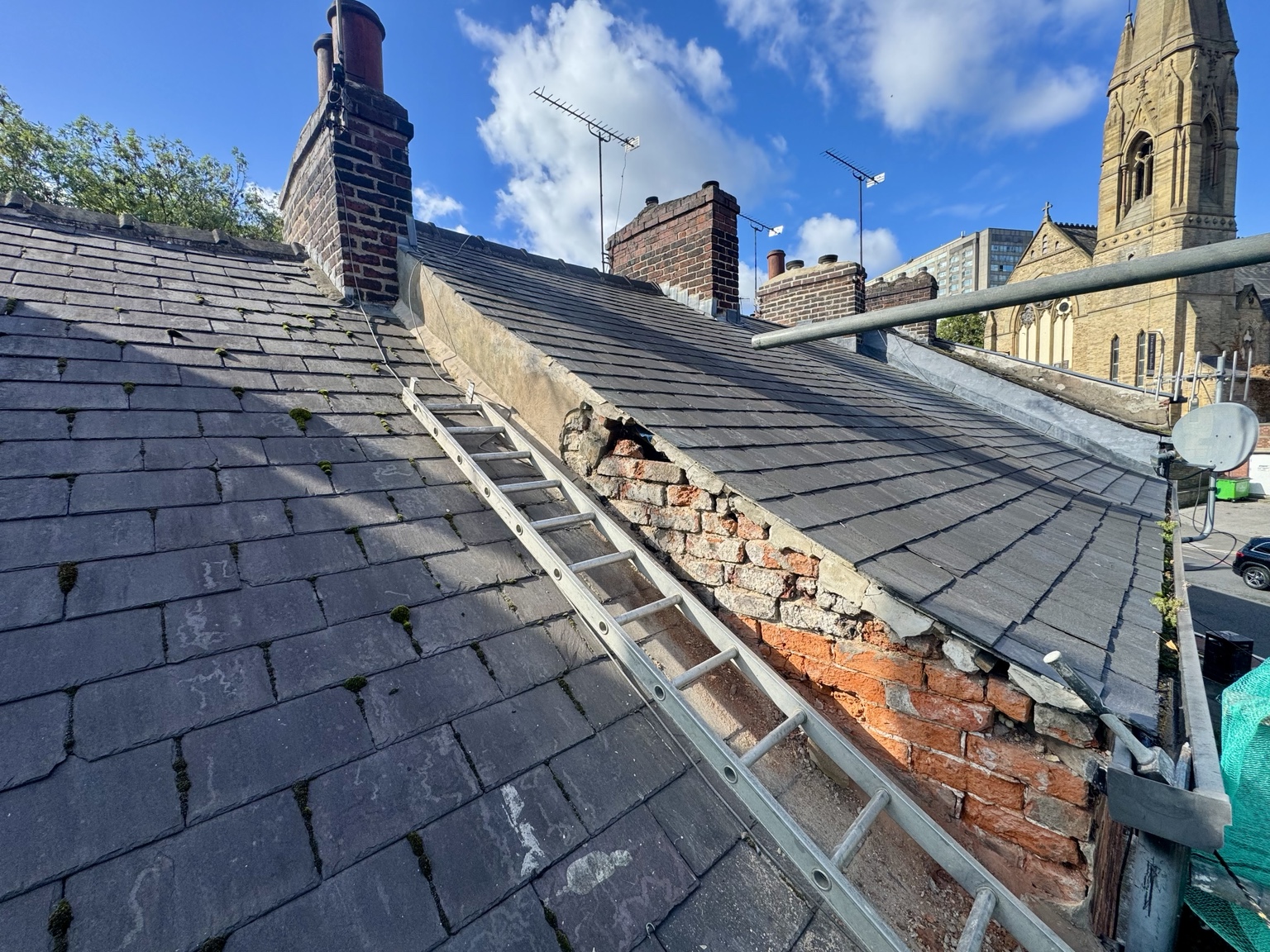
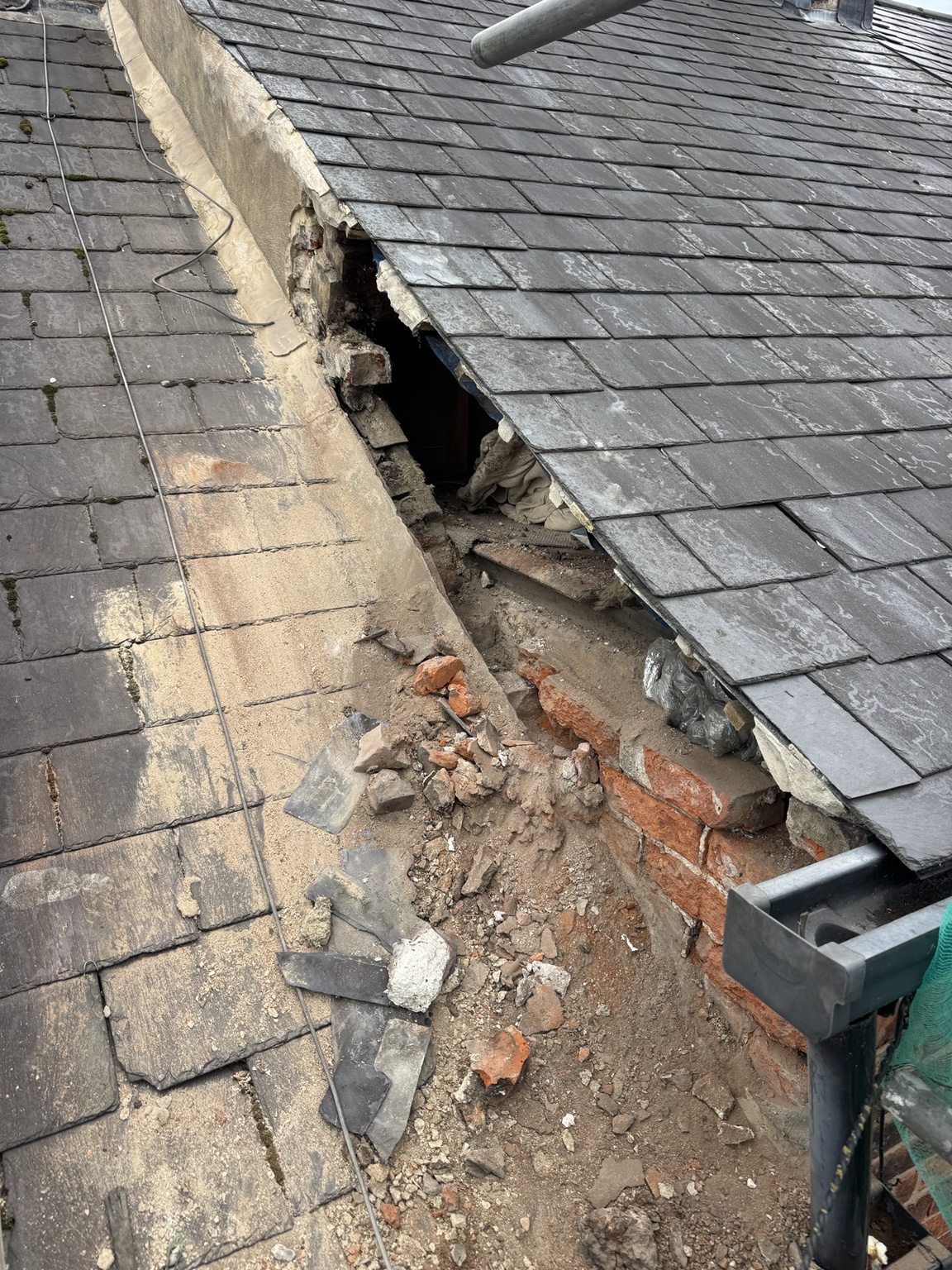
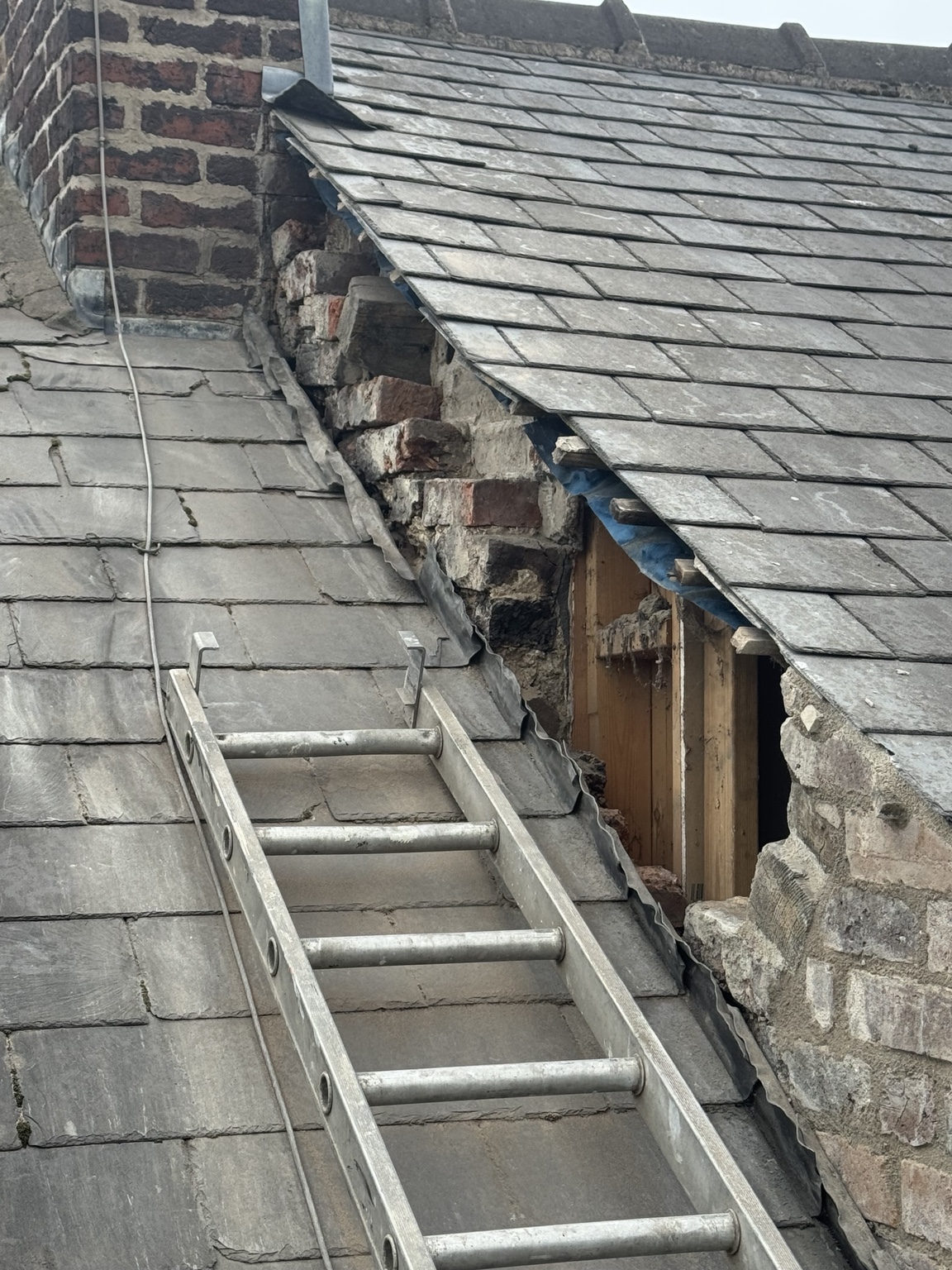
Stepped Gable Brick Repairs in Sheffield
These photographs show stepped gable brick repairs in Sheffield using lime mortar, from the damaged brickwork and opening-up stage through to the completed repair.
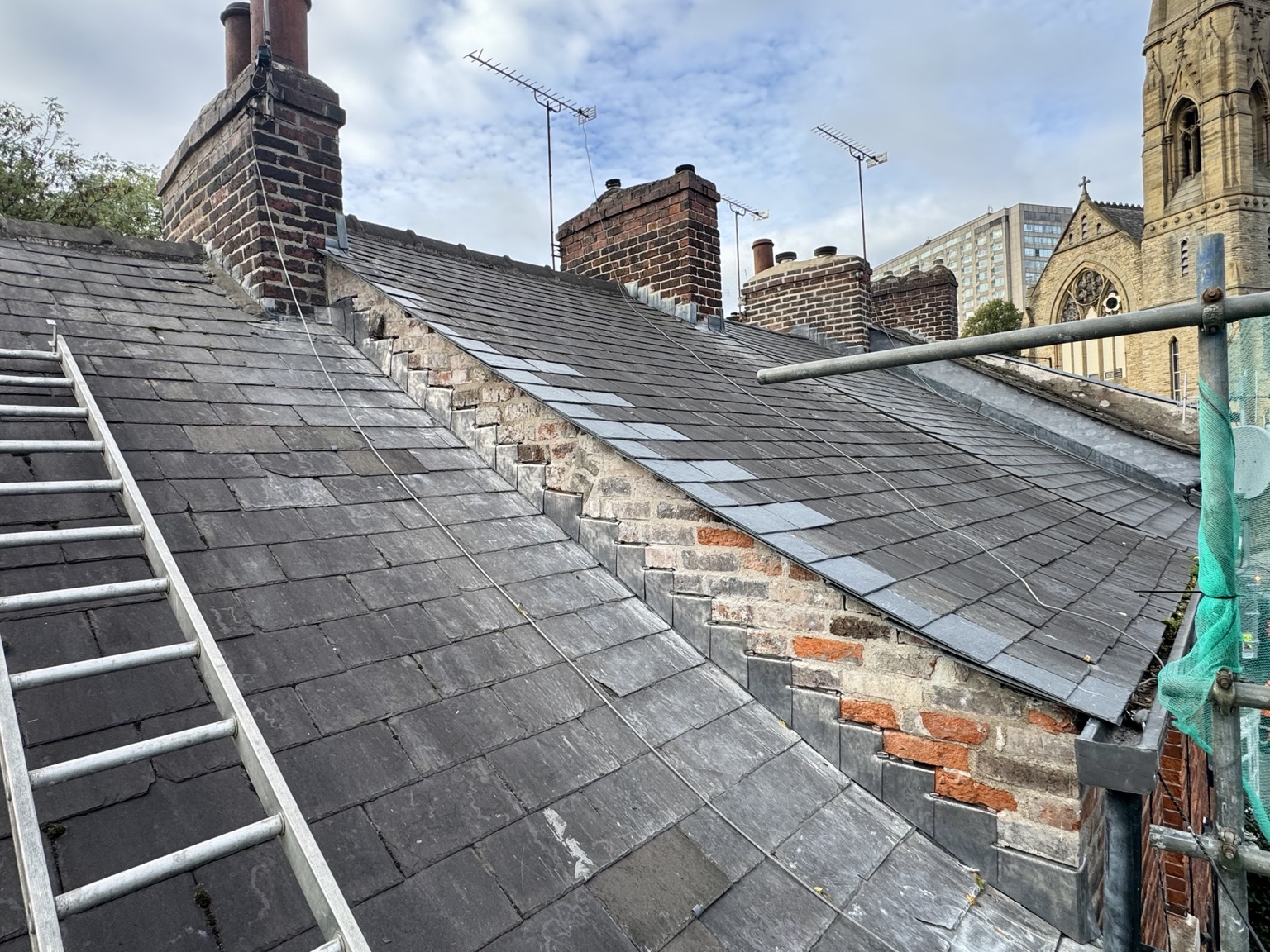
See how local repairs form part of our masonry conservation service, or explore the brick replacement and masonry repairs at Grade II Carr Lodge in Horbury.
Where a brick has deteriorated beyond a suitable repair, we replace it with a brick matched to the existing size, colour, texture and physical properties. Bond, joint width and finish also matter when integrating new work into an old wall.
We use hot-mixed air lime and lime putty mortars for appropriate traditional brickwork repairs. We are experienced with all lime binders, from hot-mixed lime and lime putty through to natural hydraulic limes (NHLs), and understand where they should and should not be used. Selection follows the existing masonry, exposure and repair requirements.
Like-for-Like Brickwork Repair to a Listed Building in York
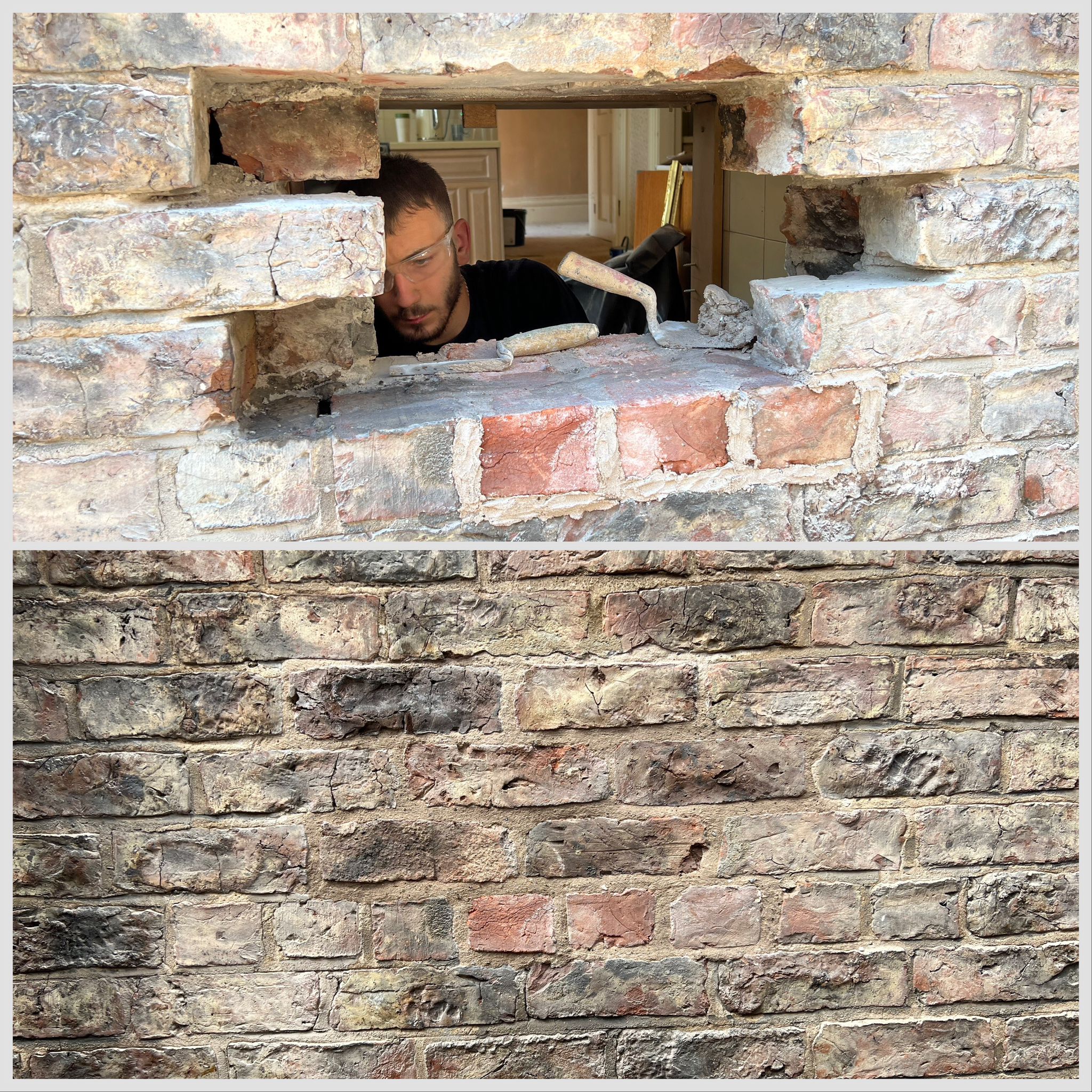
For another example of replacement brickwork, visit our Grade II Carr Lodge repair project. Our lime mortar pointing page explains more about matching mortars and joint finishes.
We carry out gable wall rebuilding and local house wall rebuilding where the condition of the brickwork requires more than pointing or individual brick replacement. We assess the cause of movement or deterioration, retain sound masonry and agree the rebuilding sequence and any structural support required.
At The Elms, Garforth, the gable and window reveals were rebuilt using reclaimed bricks and hot lime mortar. These photographs show the work in progress and the rebuilt gable brickwork.
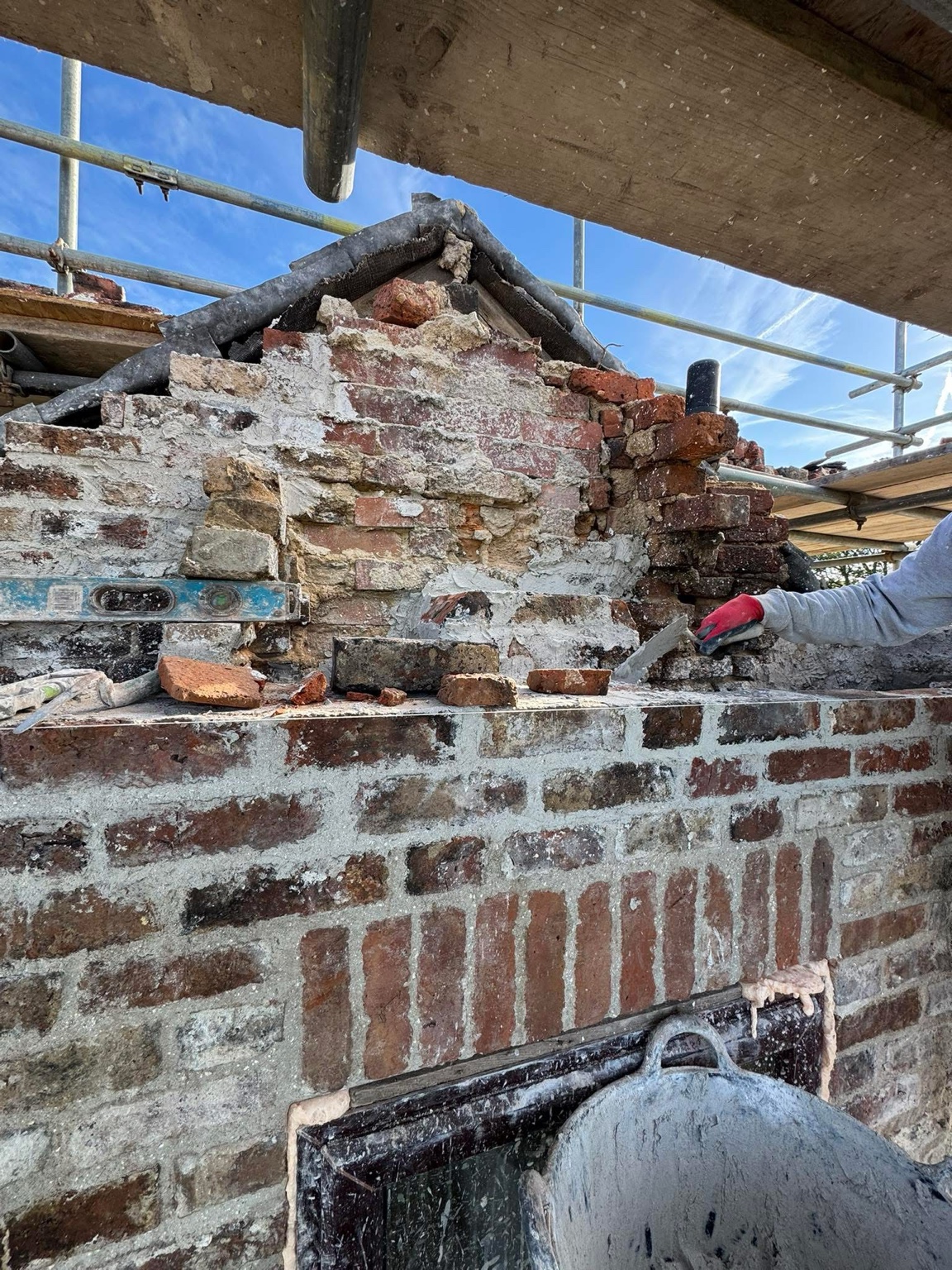
View the full Garforth gable rebuilding project.
For repairs involving more of the building, explore our heritage building services. If the masonry remains sound and the joints need attention, read about lime mortar repointing.
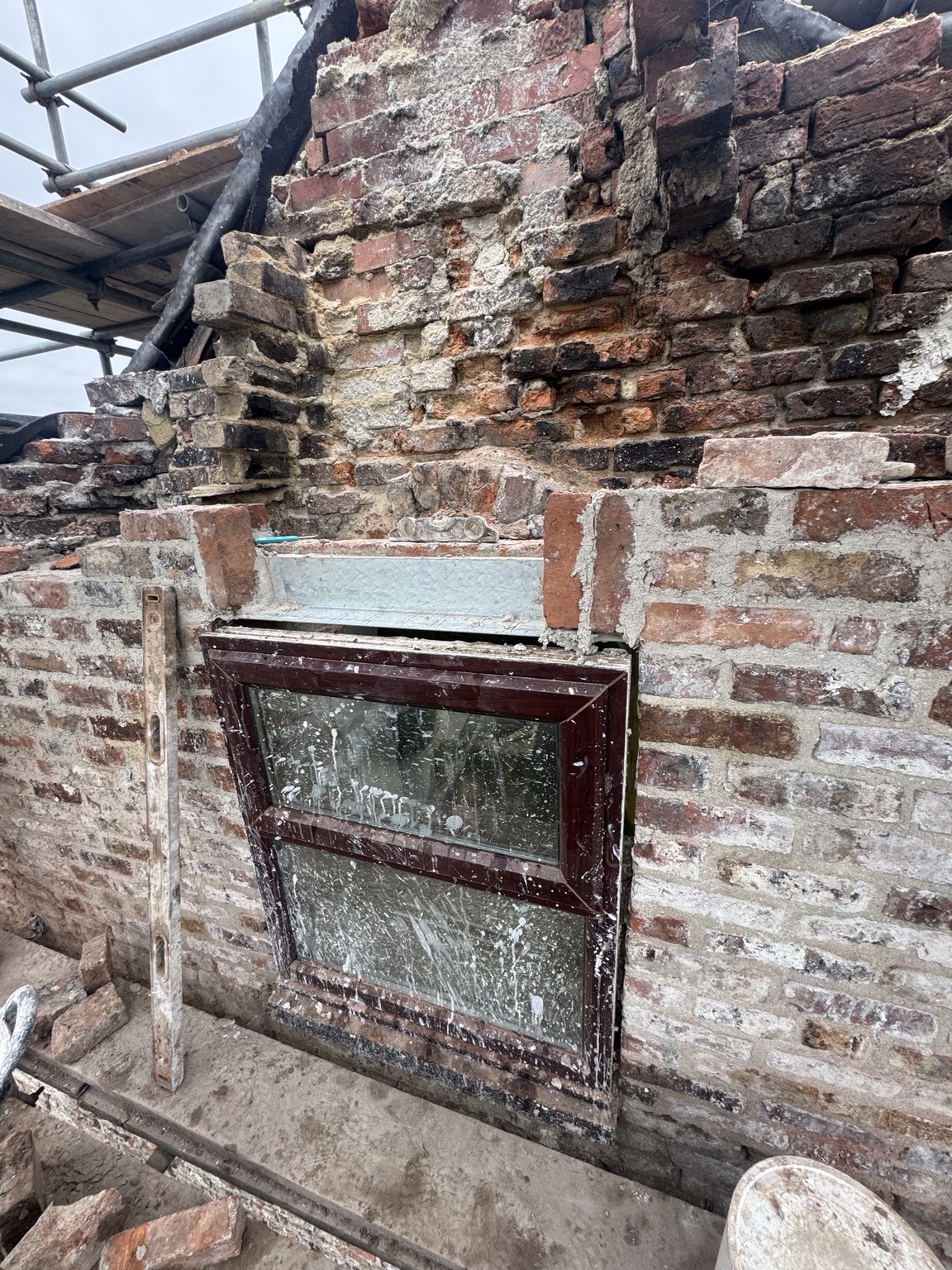
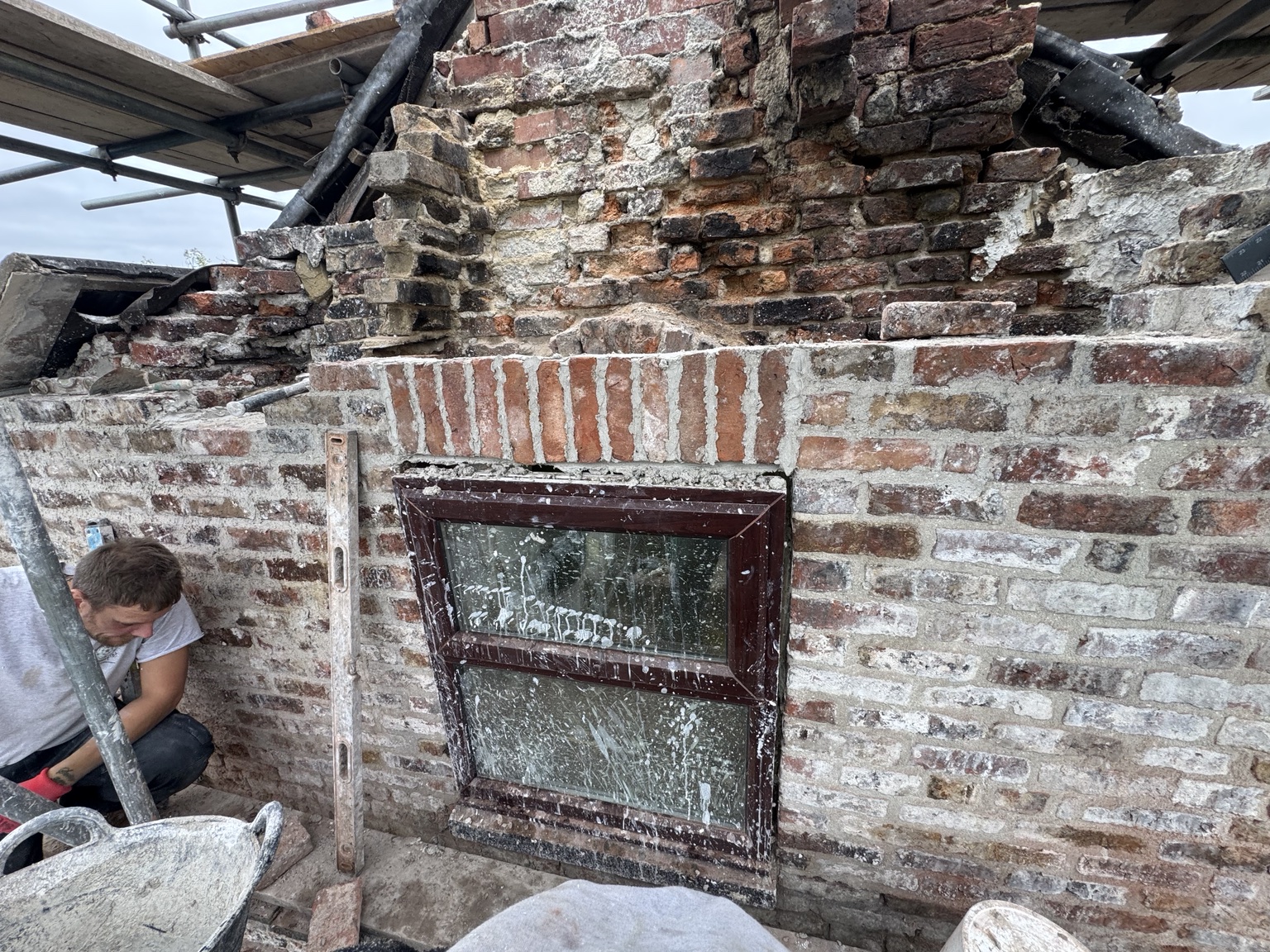
Steel lintels were installed over the window openings as part of the work at The Elms, Garforth. The photographs show the upper opening and the soldier course formed above the lintel.
We repair and rebuild brick window reveals, matching the surrounding bond, bricks, joint widths and lime mortar. Repairs may include the sides of an opening and the brickwork beneath the sill. The existing support and the cause of deterioration are assessed before work begins.
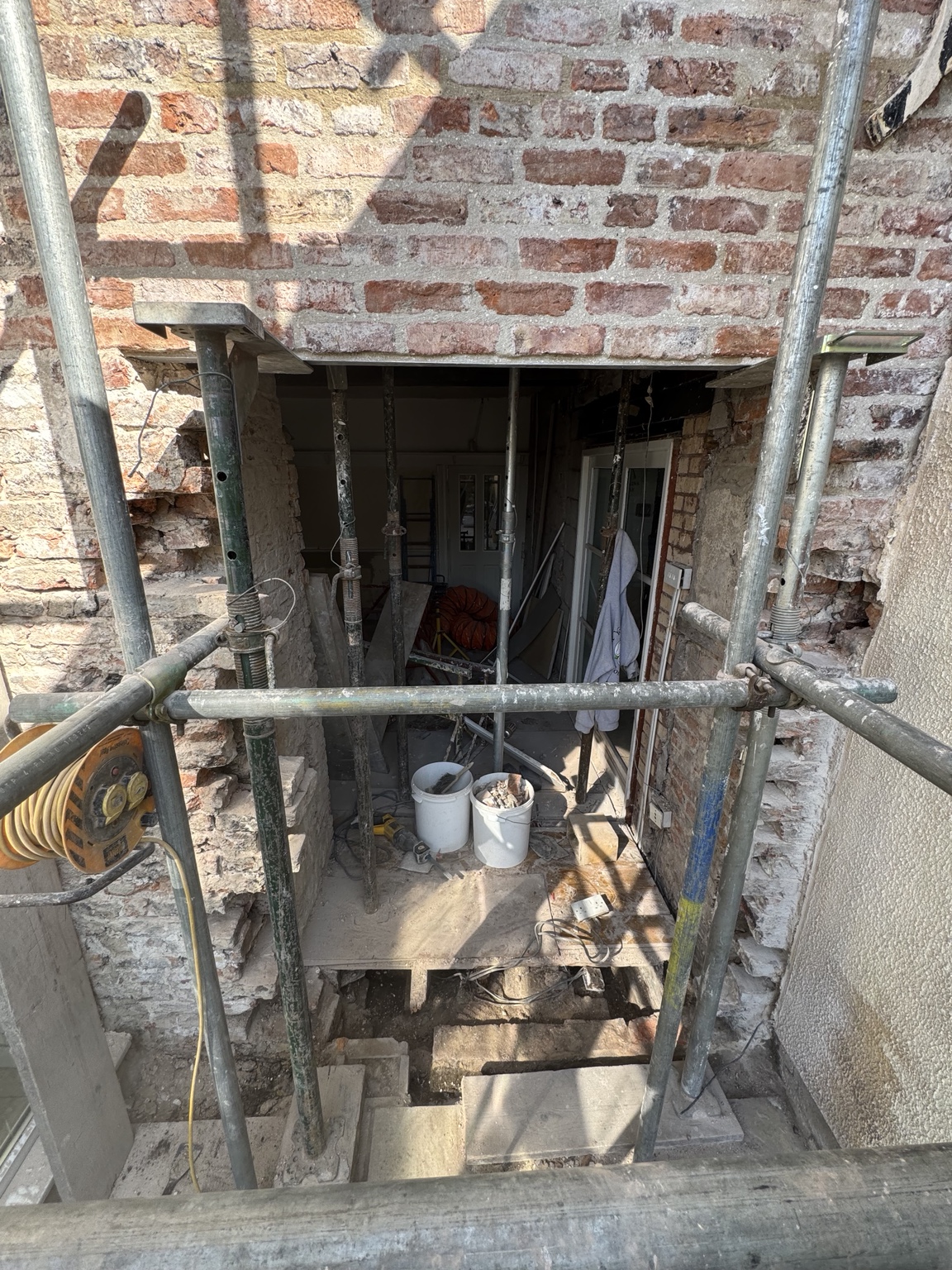
At The Elms, Garforth, the lower window opening was temporarily supported, the reveals and brickwork beneath the sill were rebuilt, and the window was refitted.
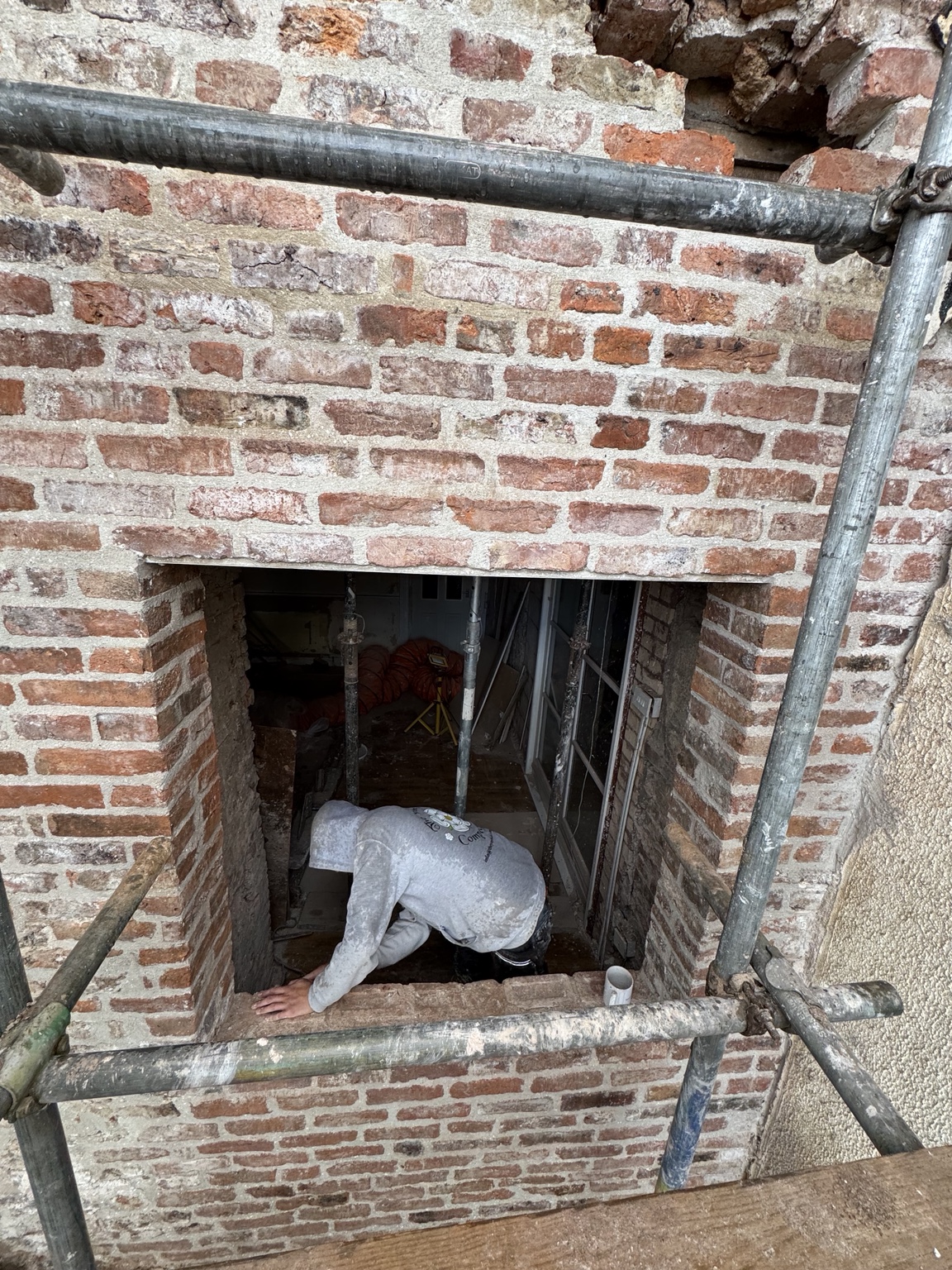
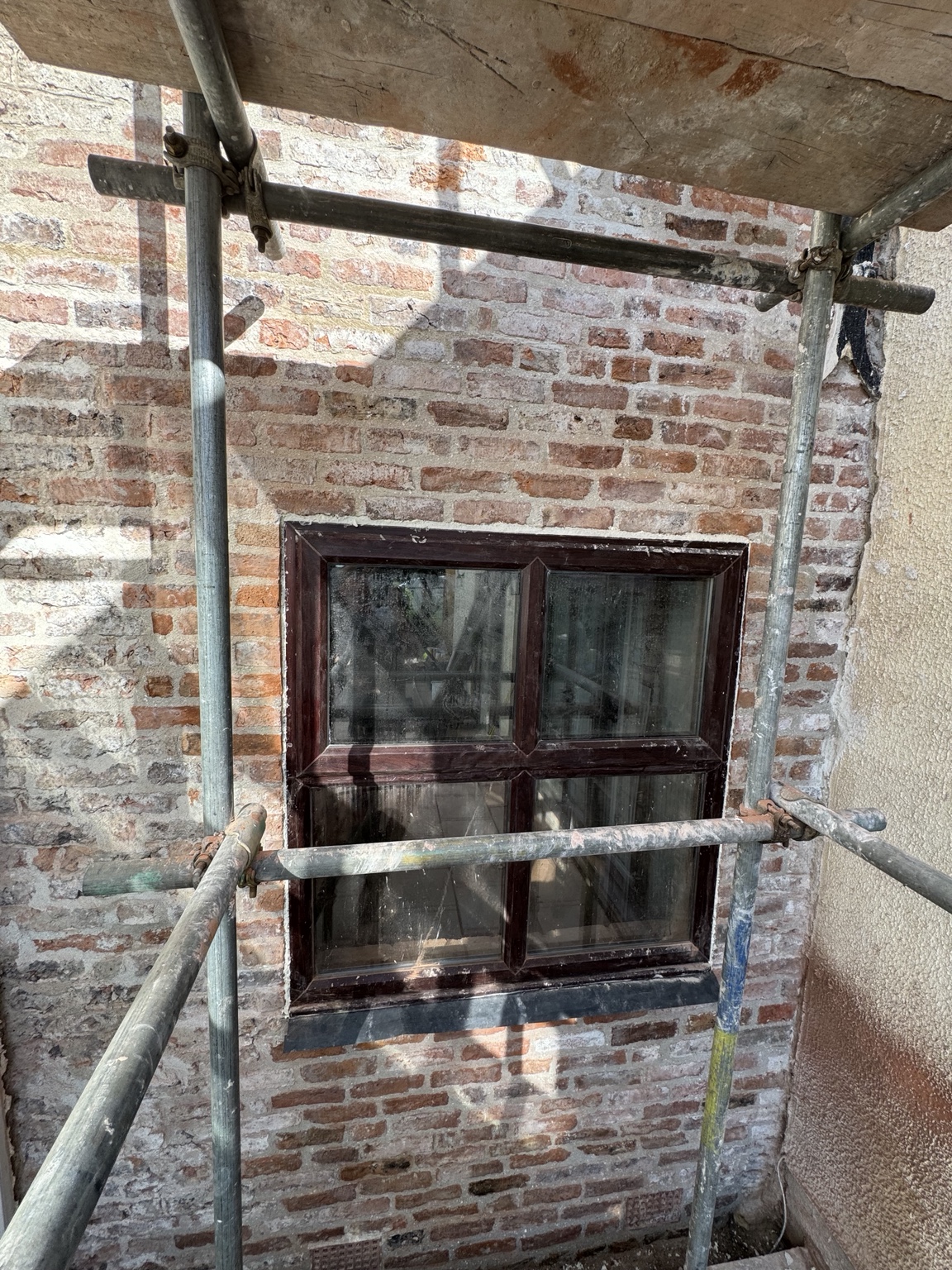
See the full Garforth gable and window repair project.
Where the masonry above an opening also needs support, see our lintel installation and repair service.
We form new openings and alter existing door and window openings in brick walls, with attention to the surrounding historic masonry, brick bond and suitable lime mortar. The scope may include the opening, reveals, brick detailing and making good around the new support.
Load-bearing walls require a planned sequence, temporary support and a suitable lintel or arch detail, informed by structural advice where required. For listed buildings, the proposed alteration and any consent requirements need to be established before work starts.
See our lintel installation and repair service.
For a wider programme of alterations and repairs to a period property, explore our heritage building services and Garforth gable and window-opening repairs.
We brick up redundant doorways, window openings and vents, matching the surrounding brickwork, bond, joint detail and mortar. The aim is a like-for-like masonry repair that integrates with the existing wall.
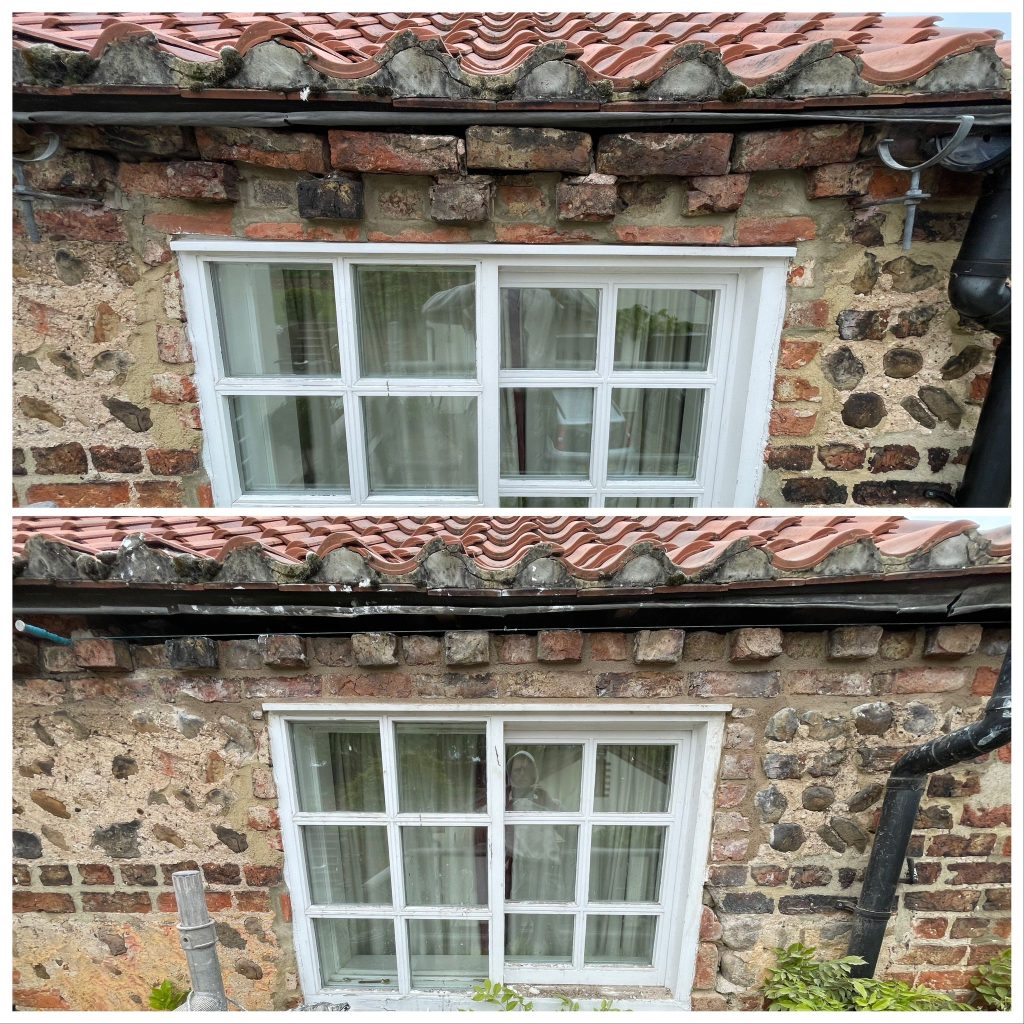
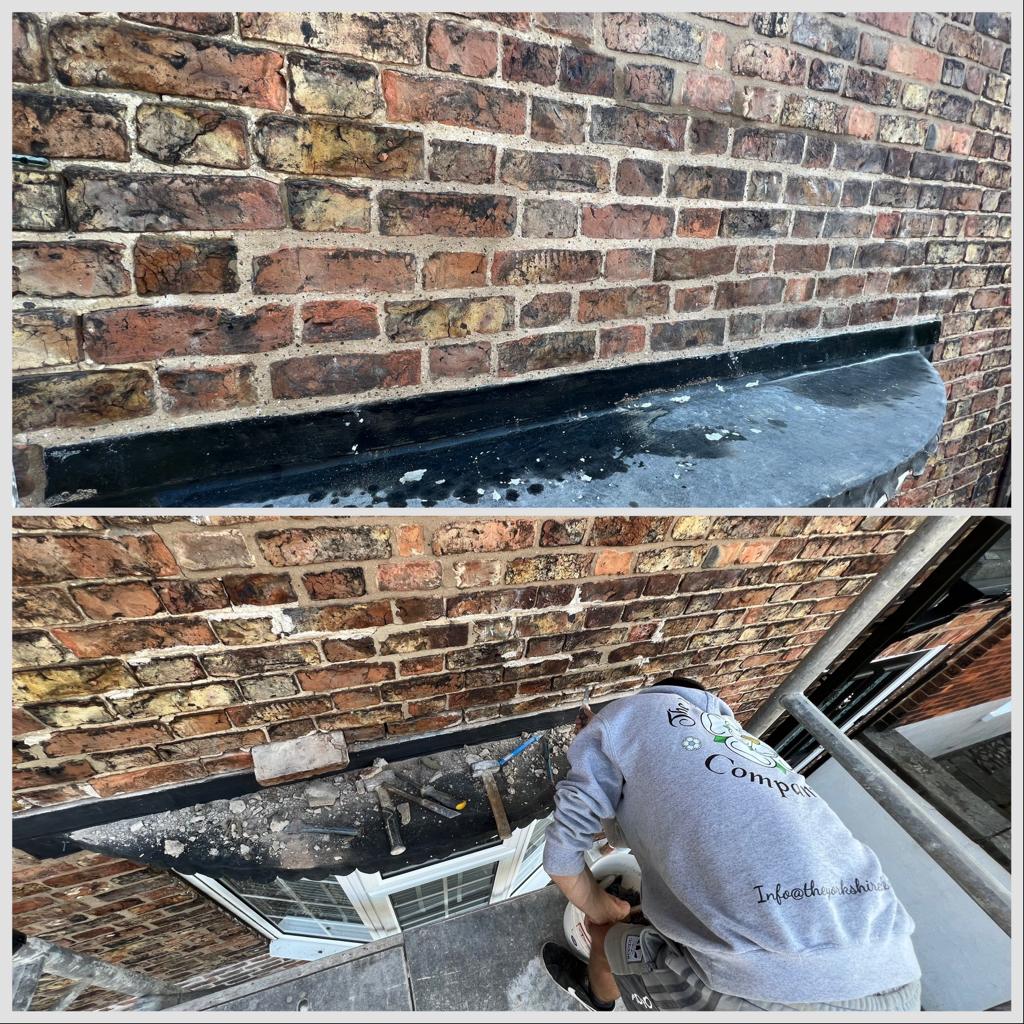
This vent opening on a listed building in York was infilled using matching brickwork, sand and quicklime. The comparison shows the opening during the work and the completed repair.

The construction, support, weathering and any ventilation affected by closing an opening are considered before agreeing the work. Alterations to listed buildings should be planned around their significance and any applicable consent requirements.
Read about our approach to conserving existing masonry and matching lime mortars for traditional buildings.
We repair and rebuild traditional brick boundary walls and garden walls, from local sections to more extensive rebuilding where the condition justifies it. Sound historic bricks are retained for reuse where practicable, with replacements selected to match the existing work.
Before rebuilding, we assess the cause of movement or deterioration and the condition of the foundations, adjoining masonry and wall-top details. The work may include careful dismantling, reinstating the original bond, compatible lime mortar and repairs to copings or brick cappings.
Where stability or foundation performance is uncertain, structural input should guide the repair. We discuss access, temporary support and the proposed sequence before work starts.
For an example of our wider wall-rebuilding work, see the Grade II listed stone ha-ha wall rebuild at Dower House, Heath. Our masonry conservation service explains how we approach retaining and repairing historic walls.
Contact us to discuss a brick boundary wall or garden wall repair.
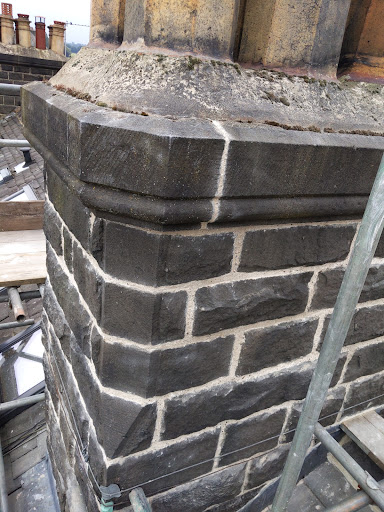
The chimney stack and its internal flue partitions at The Elms, Garforth, were rebuilt in reclaimed brickwork with hot lime mortar. Concrete flag copings and new chimney pots completed the stack.
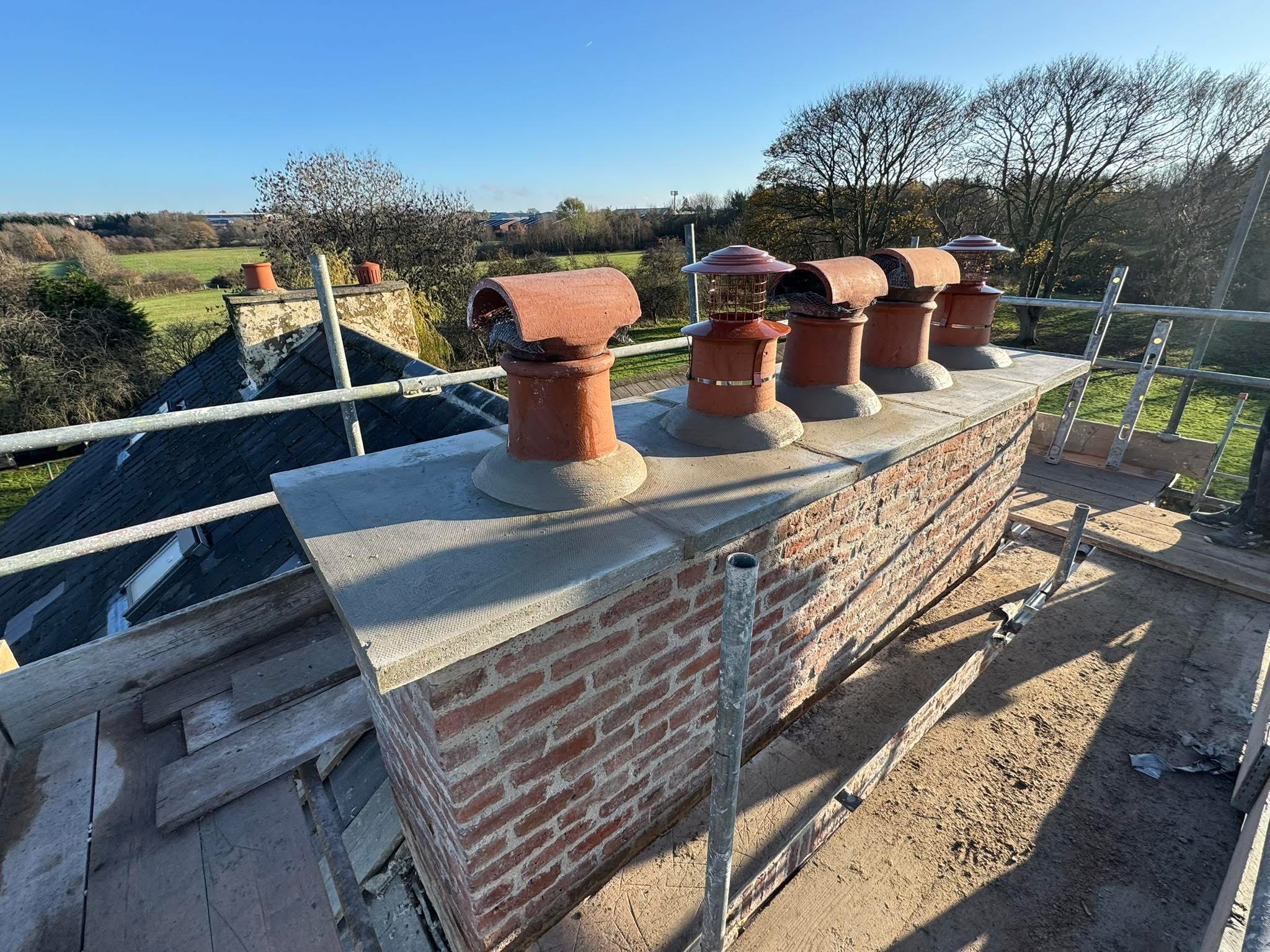
See our chimney repair service for more about chimney rebuilding, pointing and pot replacement.
View the full Garforth rebuilding project.
For another chimney-rebuilding example, explore the like-for-like chimney rebuild at Grade II* Rawdon Hall, Leeds.
Heritage Brickwork Repairs
Our heritage brickwork service covers individual brick replacement, lime mortar repointing, local rebuilding and repairs to traditional openings. We work on period homes and listed buildings, matching the brickwork and mortar to the existing construction.
- Matching brick replacement and infilling redundant openings, including the listed building vent repair in York shown above.
- Repairs to brick arches, gauged and rubbed brickwork, fine joints and decorative brick details.
- Dentil courses, soldier courses, window reveals and brickwork around lintels.
- Stepped gable brick repairs, gable wall rebuilding, local house wall rebuilding and chimney brickwork.
- Mortar matching, including appropriate hot-mixed lime, lime putty and ash mortar repairs.
The scope follows an assessment of the existing construction and the cause of deterioration. We retain sound historic fabric, discuss suitable matching materials and agree the repair sequence, including temporary support or structural input where required.
Check Out Some of Our Completed Heritage Bricklaying Projects!

The Court A Grade II Listed Building Dated in the 1800s. Low Ackworth, Wakefield, West Yorkshire
The hot lime mortar pointing work and traditional masonry repairs on this grade II listed building in Low Ackworth were carried out with great care and attention to detail to preserve the heritage of the building.

Westgate Unitarian Chapel is A Grade II Star Listed Building Dating From The 1700s, Wakefield, West Yorkshire.
The Westgate Unitarian Chapel is a grade II star-listed building in Wakefield, England. Our work included Heritage skills training for ten Wakefield College students using traditional hot lime mortars. Additionally, we have done necessary restoration.

Carr Lodge/Sunroyd House A Grade II Listed Building Dated In The 1700s. Horbury, Wakefield
Located in Horbury, Carr Lodge required extensive brick replacement and repairs using lime mortar for pointing. Check the results.
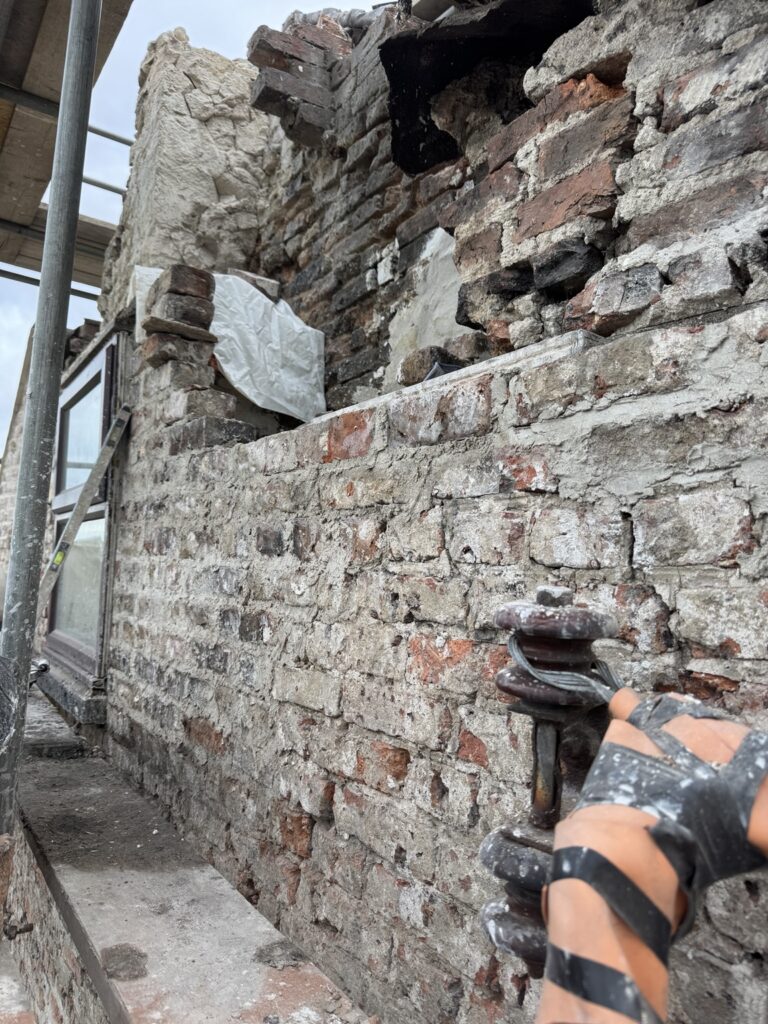
The Elms, Garforth — Brick Gable and Chimney Rebuild
Render removal, reclaimed brickwork rebuilt in hot lime mortar, chimney rebuilding and lintel installation. See the work from preparation to completion.
Why Choose The Yorkshire Lime Company for Heritage Bricklaying Services in Yorkshire?
The Yorkshire Lime Company repairs and conserves traditional brickwork across Yorkshire. Our work combines careful assessment, compatible mortars and attention to the bond, joint profile and details that give historic masonry its character.
Our wider conservation experience includes Wentworth Woodhouse (Grade I), Westgate Unitarian Chapel (Grade II*) and the Grade II listed ha-ha wall at Dower House, Heath. We bring the same care to period homes, garden walls and smaller brickwork repairs.
- Brick repairs and matching brick replacement using lime mortar.
- Traditional lime repointing, including appropriate ash mortars and fine joint finishes.
- Local rebuilding of gables, chimneys, arches and decorative brickwork.
- Experience with hot-mixed lime, lime putty and NHL binders, with selection based on suitability.
For listed buildings, we work around the significance of the existing fabric and the agreed repair requirements. Contact us to discuss your building and the proposed work.
We cover several areas across Yorkshire, including Leeds, Sheffield, York, and Huddersfield – contact us now for more information.
Send us a message
- Phone:0794 683 7106
- Email:info@theyorkshirelime.companyOpens in your application
- Website:www.theyorkshirelime.company
Frequently Asked Questions About Heritage Brickwork Repairs
A heritage bricklayer repairs and conserves traditional brickwork using methods and materials compatible with the existing building. Our work includes brick repairs, matching brick replacement, lime mortar repointing, local rebuilding and repairs to arches and decorative details. Assessment of the original construction and the cause of damage comes before deciding which repair to use.
Older brick walls often contain softer bricks, traditional mortars and details that need a different approach from modern construction. Experience in historic masonry helps with retaining sound fabric, matching repair materials and avoiding unnecessary damage. For a listed building, the work must also be planned around its significance and any applicable consent requirements.
Sometimes. The decision depends on the condition and significance of the brick, the depth of the damage and its role in the wall. A compatible surface repair, suitable reuse or a matching replacement may be appropriate. The source of deterioration also needs attention: persistent dampness, salts, frost exposure and incompatible previous repairs can all contribute. Repairing the face alone may not resolve the cause.
Yes, where replacement is appropriate. We look for bricks that suit the original in size, colour, texture, finish and physical properties, rather than appearance alone. Suitable reclaimed bricks or newly made matching bricks may be options. The mortar and joint detail also affect how well the replacement works and how it blends with the wall. Sound historic bricks are retained wherever practicable.
Not every wall needs complete repointing. If much of the historic mortar remains sound, local joint repairs may be sufficient. We assess open joints, the depth and condition of the mortar, any hard later pointing and the condition of the brick edges. Removing sound mortar unnecessarily can cause avoidable damage. Where wider repointing is justified, the mortar and finish should suit the existing brickwork.
We use suitable hot-mixed air lime and lime putty mortars for traditional brickwork repairs, selecting the binder and aggregates to suit the existing construction and exposure. Historic ash mortars and fine joints require particular attention to the original details. Compatibility includes moisture movement, drying and the relationship between mortar and brick; choosing a stronger mix or matching colour alone is not enough.
It depends on the work and its effect on the building’s special architectural or historic interest. Some compatible like-for-like repairs may not require listed building consent, while replacement or alteration of significant fabric may do so. Check the proposed scope with the local authority conservation officer before starting. An agreed repair specification and photographs can help explain what is proposed.
Cost depends on the area and depth of deterioration, access, the number and type of replacement bricks, mortar matching, preparation and any rebuilding or structural requirements. Local repairs and full repointing are different scopes. We assess the building and discuss the proposed work before quoting, so the price reflects the repair required. Photographs can help with an initial discussion, but may not replace an on-site assessment.
We undertake masonry repairs to traditional openings, including brick arches and the associated brickwork around lintels. The existing support and cause of movement must be understood before work begins. Where stability is uncertain, structural advice should guide the method and sequence. See our lintel installation and repair service for more about these openings.
Yes. We carry out traditional bricklaying and brick repairs with lime mortar across Yorkshire, including matching brick replacement, repointing and local rebuilding. The binder, aggregates and finish are selected for the existing wall and the work required. We assess the masonry before recommending a repair.
Yes, where rebuilding is justified by the condition of the masonry. Our Garforth gable and chimney rebuild shows reclaimed brickwork rebuilt in hot lime mortar, alongside window reveal repairs and lintel installation. Temporary support and any structural requirements must be established before taking masonry down.
Yes. We assess gauged and rubbed brickwork, including finely jointed arches and decorative details, and agree a repair suited to the existing work. The approach may involve local repairs, carefully matched replacement bricks or limited rebuilding. Brick shape, surface finish, joint width and mortar all need attention. Sound historic work is retained wherever practicable.
Yes. We assess damaged, bowing or unstable brickwork and agree whether local repairs or rebuilding are required. The scope may include a gable wall, a section of a house wall, associated window reveals or work around openings. Sound historic fabric is retained wherever practicable, with compatible bricks and lime mortar used for the repair.
Explore our Garforth gable wall rebuilding project or heritage building services to find out more.