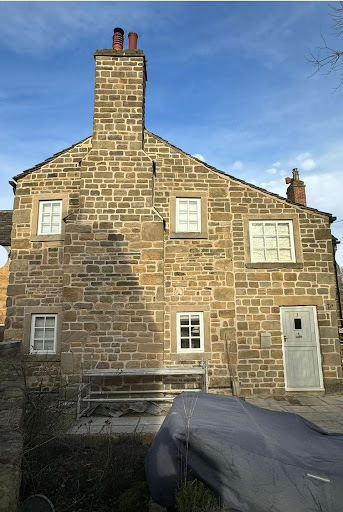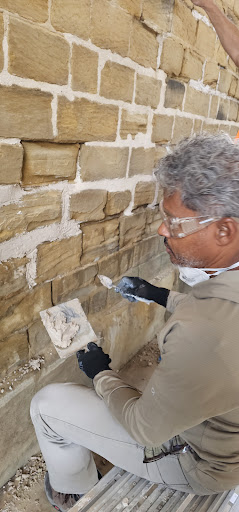
Like-for-like chimney rebuilding and repointing at Rawdon Hall in Rawdon, Leeds. This project brought together careful dismantling, rebuilding of internal flue divisions, reinstatement of stonework and chimney pots, and repairs to the top weathering detail. The photographs show the work from the existing condition through to completion.
Rawdon Hall is a Grade II* listed building. Its chimney stacks form part of the building’s character, so the aim of a like-for-like repair is to retain that character and sound historic material while addressing the defective construction.
Watch the Rawdon Hall Chimney Rebuild
The Chimney Before Repair
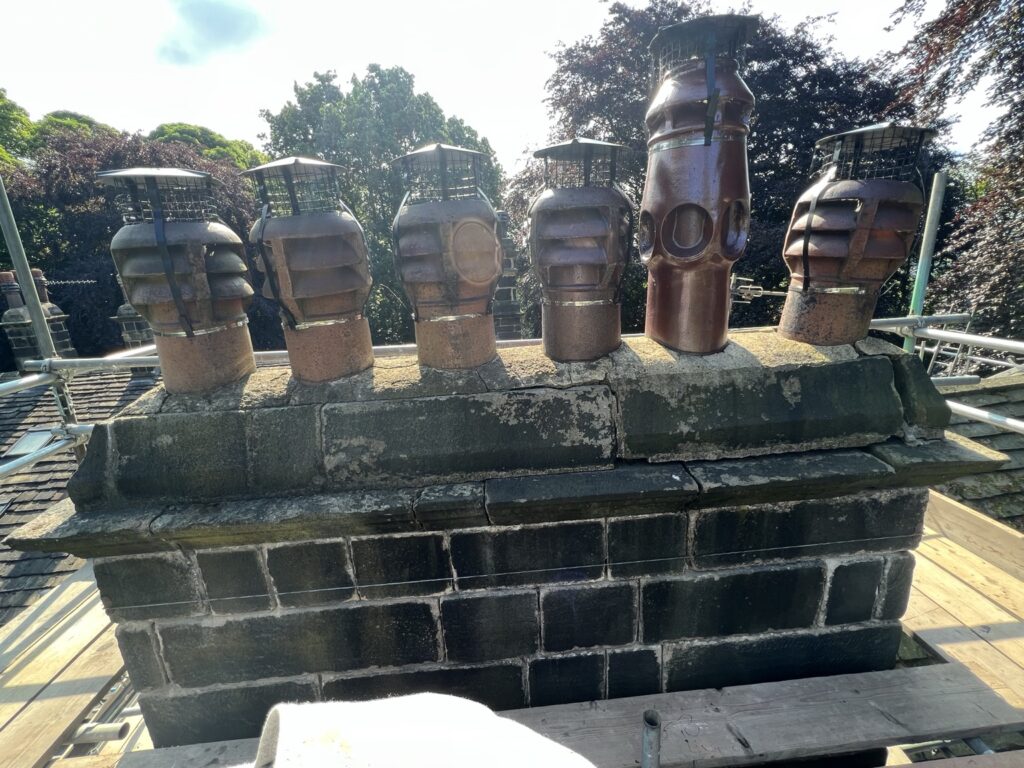
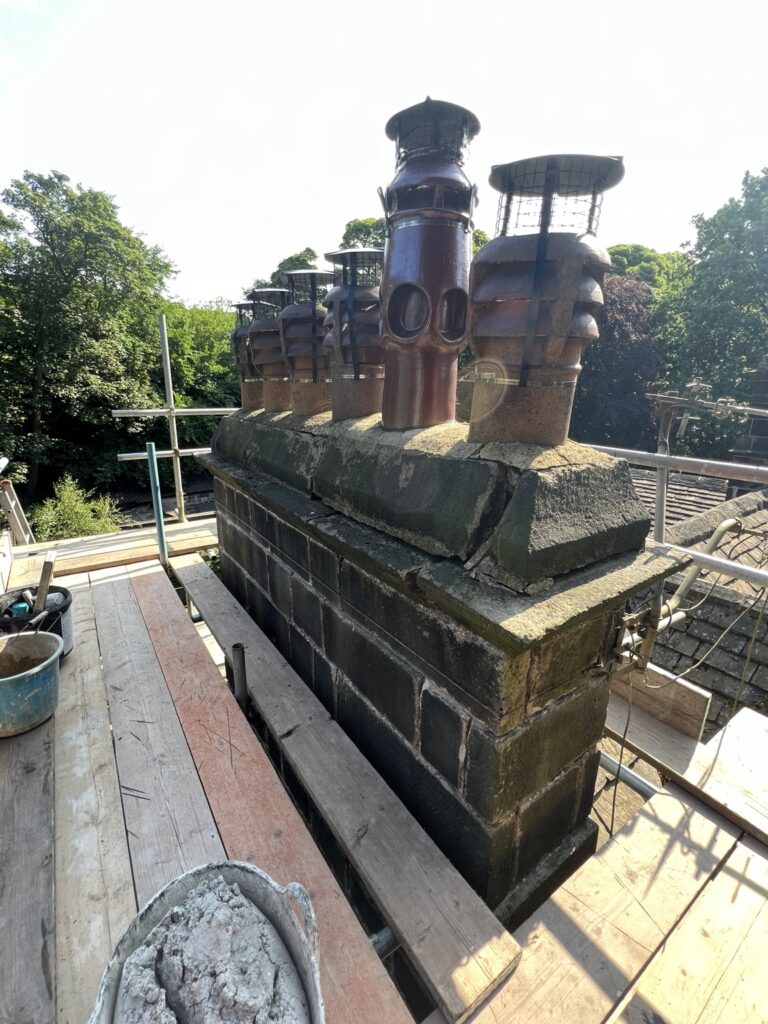
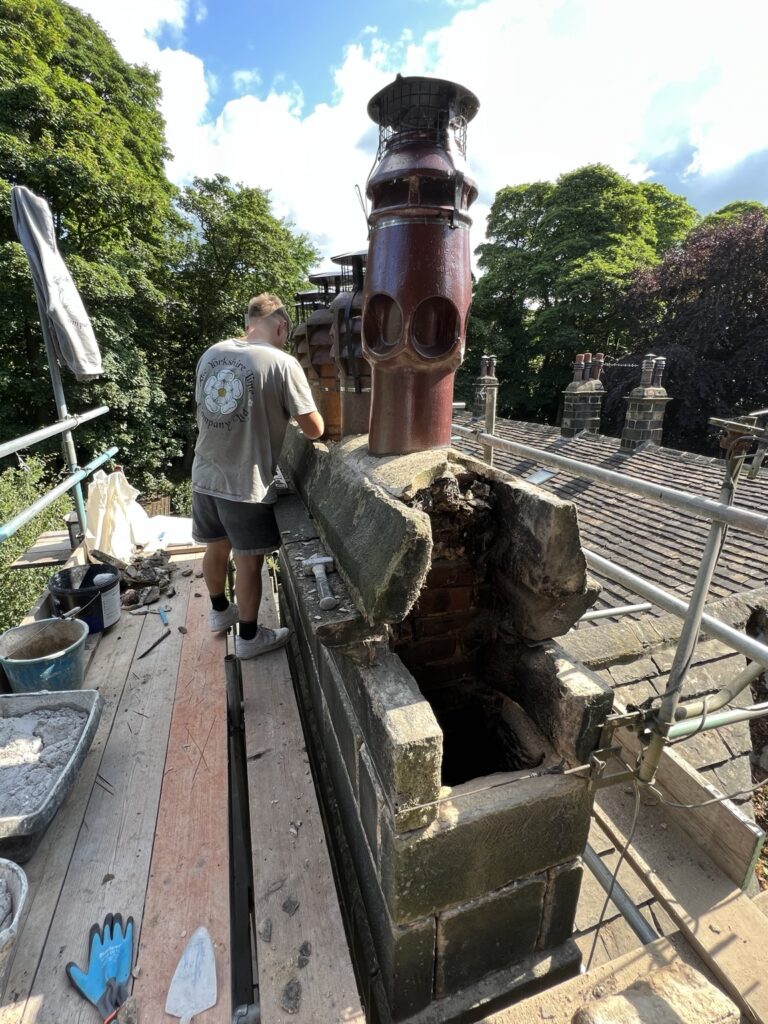
The original photographs show the stone stack, projecting ledge, shaped upper stonework and a distinctive group of six chimney pots. The upper joints and weathering details required attention. The repair sequence shows the affected upper masonry being opened up, exposing the internal construction rather than treating the work as an external pointing job alone.
What Like-for-Like Chimney Rebuilding Involves
Like-for-like work means matching the existing form and construction as closely as the repair requires. It includes the masonry coursing, joint appearance, projecting details and the position and character of the pots. It also means conserving usable material rather than replacing the whole stack simply to make it look new.
Before dismantling a historic chimney, the repair approach should record the arrangement and condition of the masonry and pots. Photographs and measurements help guide reinstatement; individual pieces can be marked and stored in order where necessary. The extent of dismantling should be limited to what the condition and agreed repair scheme require.
For listed buildings, the proposed scope and any consent requirements need to be established before work starts. A like-for-like description does not by itself establish whether consent is needed.
Careful Dismantling and Internal Flue Divisions
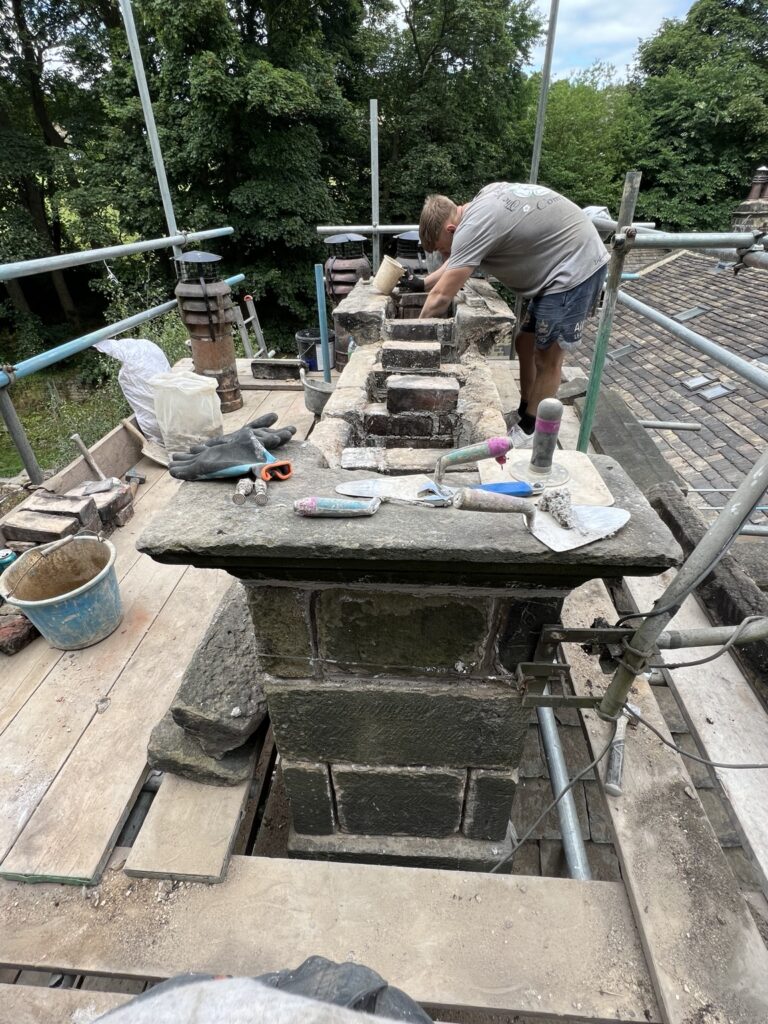
The work photographs show the upper stonework being carefully dismantled and the internal brick divisions being rebuilt. These divisions are known as feathers or withes; they separate neighbouring flues within the same stack. Their condition matters even though they are hidden once the chimney is complete.
Rebuilding the outer masonry without addressing defective internal divisions would leave an important part of the repair unresolved. The sequence allows access to those divisions before the surrounding masonry and upper weathering stones are reinstated. The intended use of each flue must also inform any inspection or testing required before it is returned to service.
Rebuilding Stonework and Hot Lime Repointing
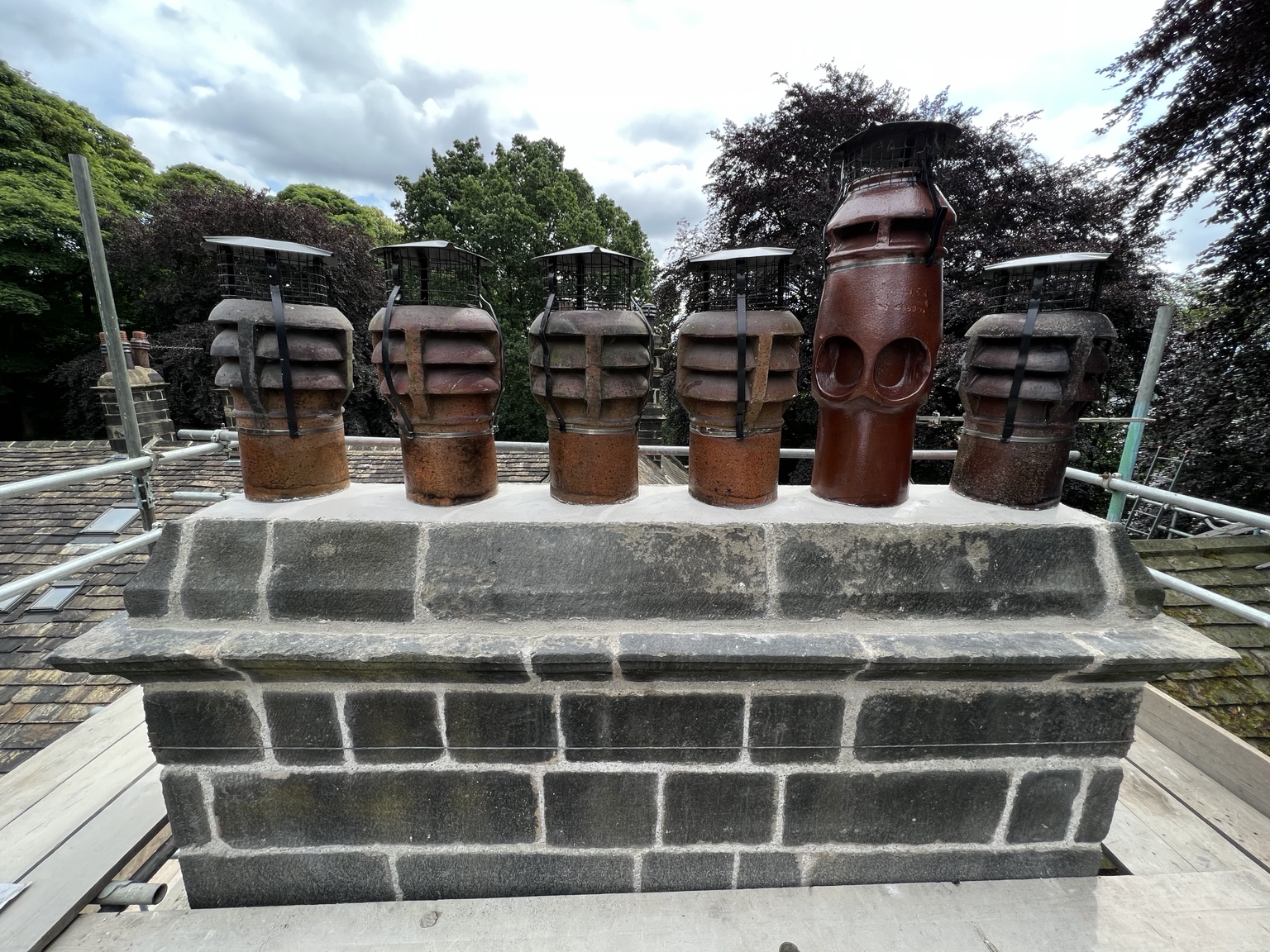
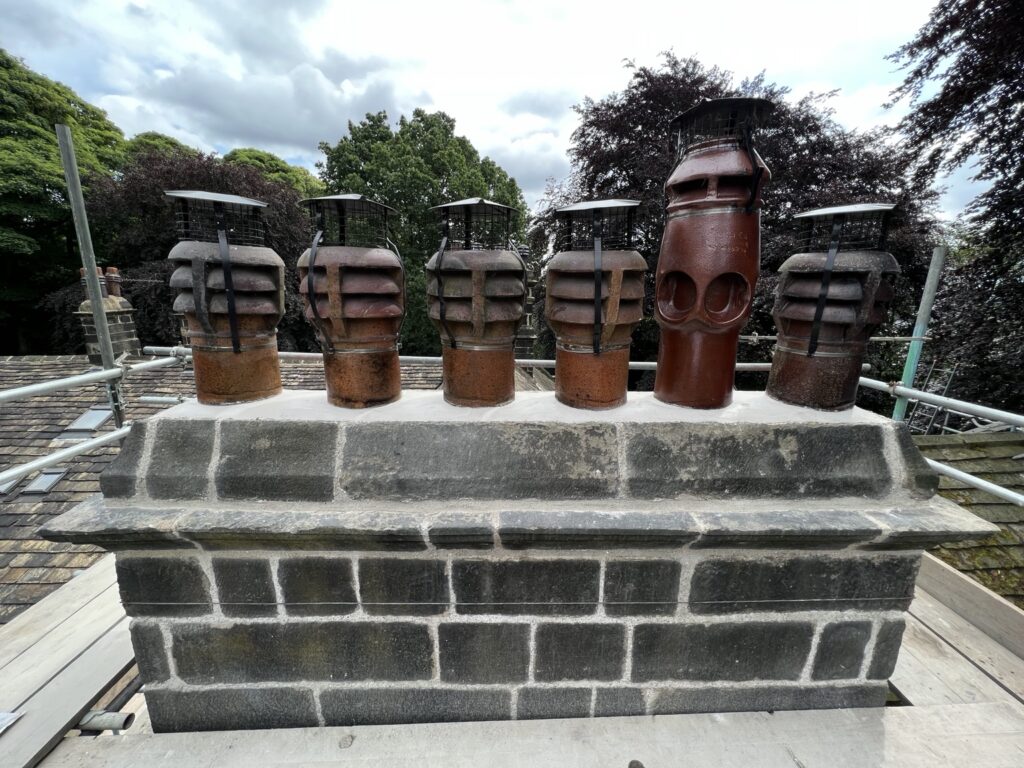
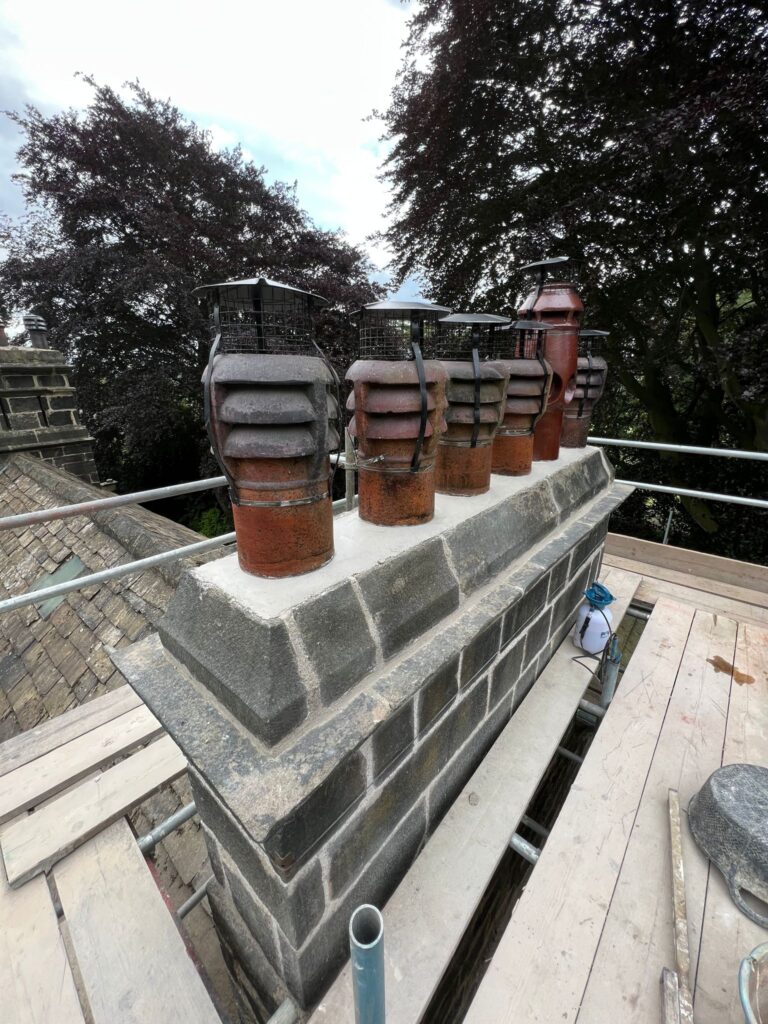
The external stonework was rebuilt and repointed as part of the chimney repair. The completed photographs show the familiar coursed stone appearance and projecting ledge retained, with the upper shaped stones reinstated beneath the pots.
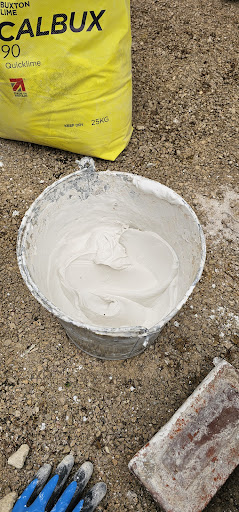
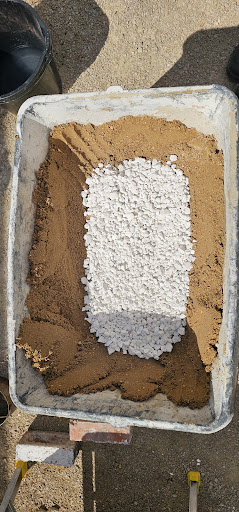
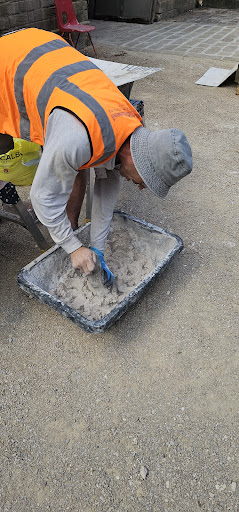
Our hot lime mortar pointing approach centres on compatibility with the existing brick and stone. The aggregate, joint finish and mortar specification should suit the masonry and its exposure. Sound material is retained, while defective joints are prepared without unnecessarily damaging the edges of the stone.
Mortar needs to be worked into the joints and compacted, with finishing timed to its firmness and the weather. Fresh lime work requires suitable protection and curing. The objective is a sound repair that sits comfortably with the surviving masonry, rather than a hard surface coating over defective work.

Reinstating the Chimney Pots and Weathering Detail
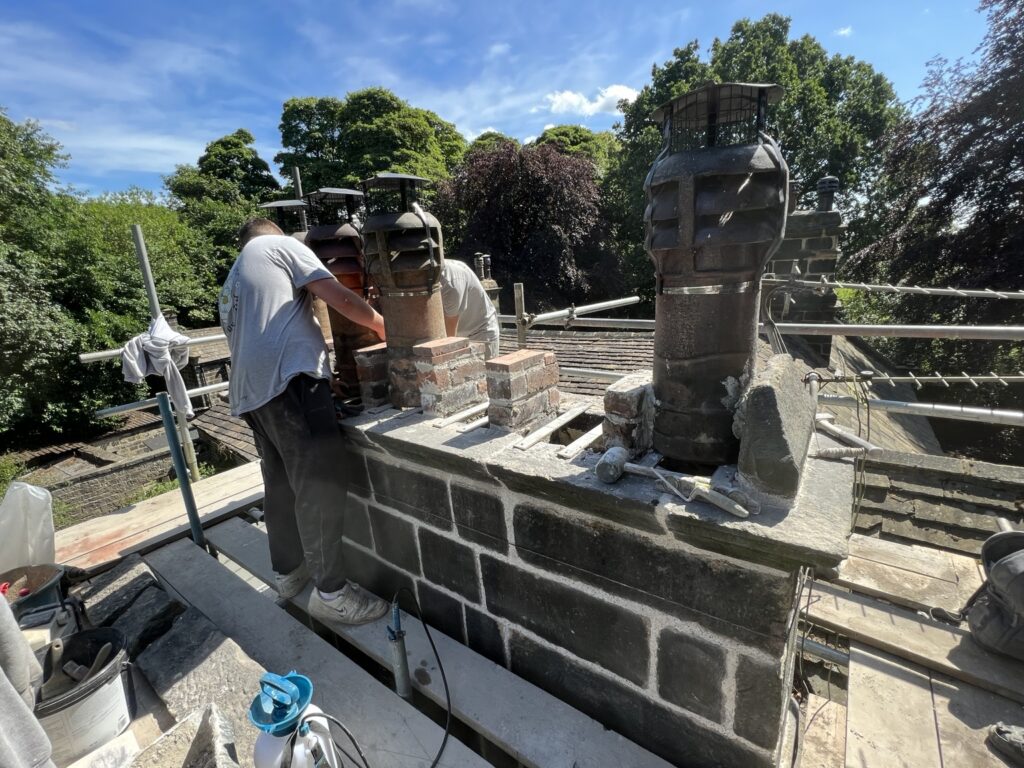
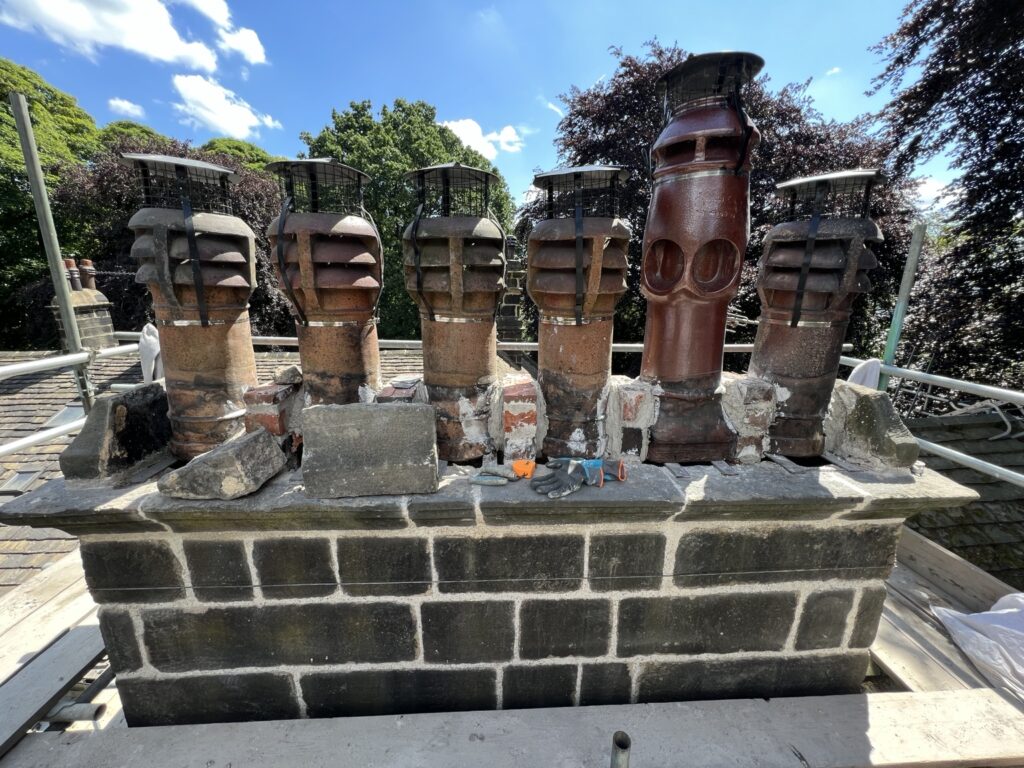
The photographs show the existing pots being reinstated as the upper work progresses. The completed chimney retains the six-pot arrangement, including the taller, distinctive pot. Preserving these features helps keep the character of the original stack.
The mortar weathering at the top of a chimney is commonly described as haunching or flaunching. It needs to support the pot seating and shed rainwater away from vulnerable openings and joints. Its shape, backing and material specification should be considered alongside the supporting masonry and stone weathering details.
Refitting an existing pot is different from chimney pot replacement. Serviceable historic pots should be retained where practicable; replacement is considered where their condition requires it. Any cowl or terminal must also suit the use of the flue.
The Completed Like-for-Like Chimney Repair
The finished photographs show the rebuilt upper stonework, renewed pointing and top weathering, with the original arrangement of pots reinstated. They demonstrate how chimney rebuilding can repair the construction while preserving the stack’s established appearance.
Chimney Repairs in Leeds and Across Yorkshire
We undertake chimney repairs, chimney rebuilding and chimney repointing across Yorkshire, including work to traditional and listed buildings. Services include internal masonry repairs, pot refitting and replacement where required, haunching and flaunching, and repairs to stone crowns and drip details.
To discuss a chimney repair, contact The Yorkshire Lime Company with photographs and the property location. Close inspection may be needed to establish the condition and repair scope. You can also browse our other conservation projects.
Further Guidance on Historic Chimney Repairs
The SPAB chimney maintenance guide covers masonry joints, pots, weathering details and internal divisions. Historic England’s guidance on chimneys and flues explains why the internal construction and intended flue use need consideration alongside external repairs. These are general conservation references; the photographs above document this Rawdon Hall project.
Follow us on Facebook to keep up to date with our live projects and training events. Browse our Facebook photo gallery (opens in a separate tab or window).