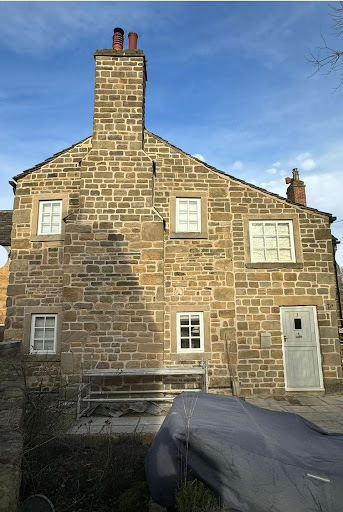
The best approach to dirty render may be gentle local cleaning, repair and renewal of limewash, or leaving it alone. First identify the render, its surface finish and why the stain is present. A technique that suits dense modern render can remove a traditional limewash or damage a soft historic render.
Identify what is on the wall
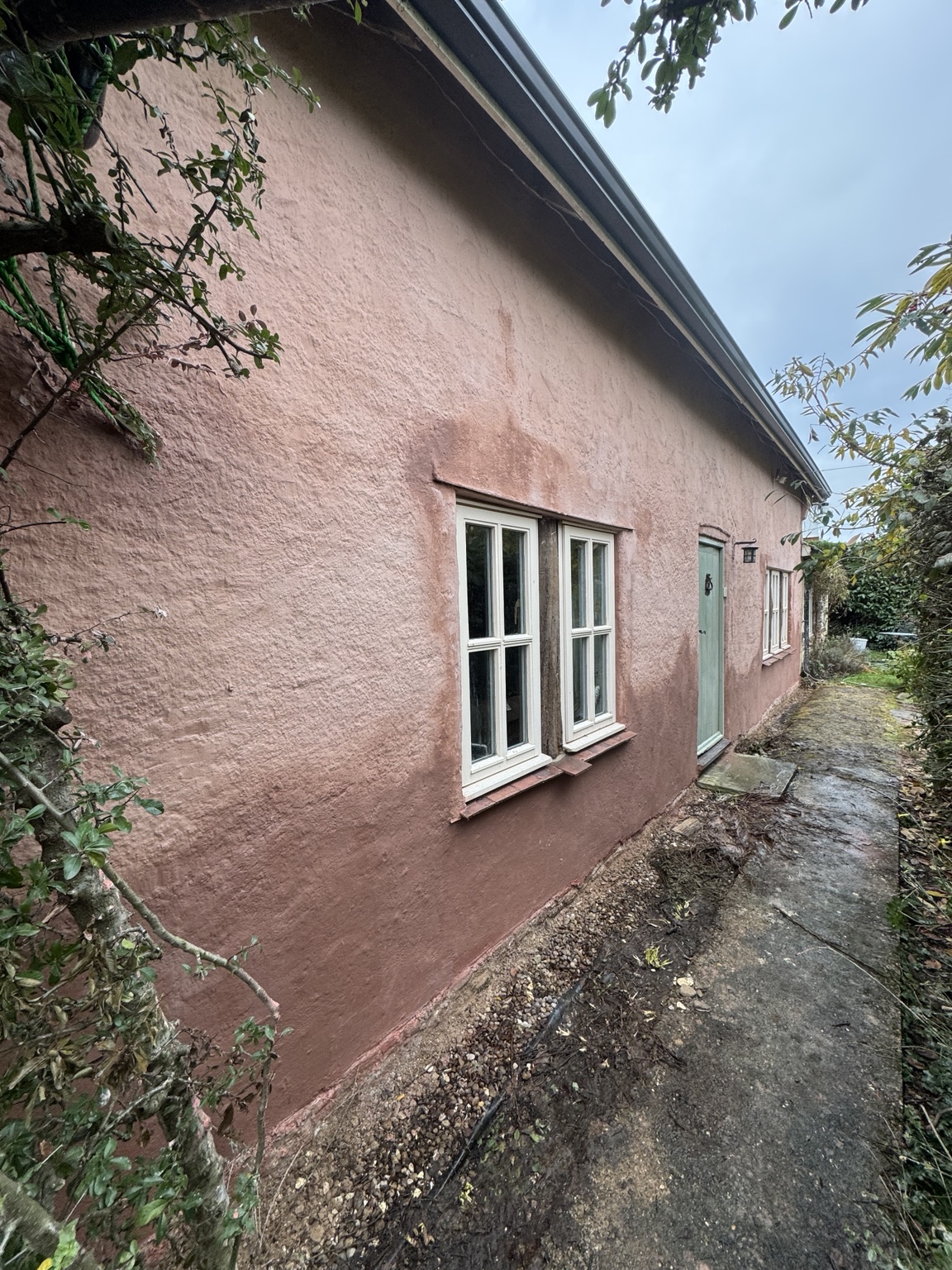
Look for surviving limewash, paint, later repairs and areas that sound hollow or show cracking. Record these before disturbing them. The existing finish may have significance, and a fresh-looking wall is not sufficient justification for stripping it.
Check roof edges, gutters, downpipes, ground levels and splashback. If a wall remains wet because of a defect, cleaning will treat the appearance while leaving the cause in place.
When renewal is preferable to cleaning
Limewash is a sacrificial finish. Washing or scrubbing can remove it unevenly and expose the render. Where the coating is worn, compatible preparation and renewal may be more appropriate than trying to clean it like a modern washable paint.
Loose or failed render needs assessment before any cleaning. Local like-for-like repairs can retain sound historic work. The choice of aggregate, binder, texture and finish should follow the existing material and the building’s performance.
Use a trial to choose the method
For a justified clean, start with a small representative trial and establish permission requirements before work on listed fabric. Allow the trial to dry and check colour, texture, adhesion and loss of material. Judge the effect on both the render and its coating.
Controlled DOFF treatment may suit some surfaces, but heat and water can remove weak finishes or disturb friable render. Pressure, temperature, distance and dwell time must be set from the trial. Do not assume steam cleaning is harmless because no abrasive is added.
Other options and practical limits
A soft brush or limited manual treatment may be enough for a small area. A suitable specialist product may be considered for a defined deposit, subject to compatibility and residue control. High-pressure washing and abrasive treatment can erode soft lime surfaces and should not be adopted as routine maintenance.
Protect adjacent joinery, metalwork and planting, and manage runoff. Stop if the trial exposes weak material or unacceptable colour change. Some staining may need to remain.
Our approach to lime render
Our lime rendering service mainly involves small, like-for-like conservation repairs. We have a small, competent team and can arrange larger projects with a trusted plasterer and renderer experienced with different lime binders. External limewashing can provide the appropriate renewable finish where the background and historic evidence support it.
Further reading: SPAB: preventative maintenance; Historic England: care of buildings and biological growth; Historic England: listed building consent.