Render should shield your home – not suffocate it. Yet for many older buildings, especially those coated in cement-based render, the opposite is happening. Trapped moisture, cracked facades, and invisible decay are just some of the consequences of using the wrong materials on traditional structures. At The Yorkshire Lime Company, we specialise in helping property owners make the right decision when it comes to external finishes. Whether you’re looking to restore a listed cottage or assess render on a Georgian terrace, we’ll help you choose a breathable, sympathetic solution that supports the long-term health of your building.
Understanding the Role of Render in Traditional Buildings
Render is a protective coating applied to the external surface of a wall. Historically, it was made using lime, not cement. Lime render allows moisture to escape, flexes with the building over time, and contributes to a balanced internal environment. It also provides weather resistance while still letting solid-wall buildings “breathe” – a quality that modern renders often fail to replicate.
In many older buildings, render also played an aesthetic role. Builders used lime render to unify the look of uneven stonework, add colour with limewash, and express local architectural styles. But above all, lime render worked in harmony with traditional building materials like stone, cob, or soft-fired brick.


The Rise of Cement-Based Render
In the 20th century, cement became a popular choice for external coatings. It was quick to mix, cheap to buy, and gave a crisp, uniform finish. But what seemed like progress soon proved to be a major issue for heritage buildings.
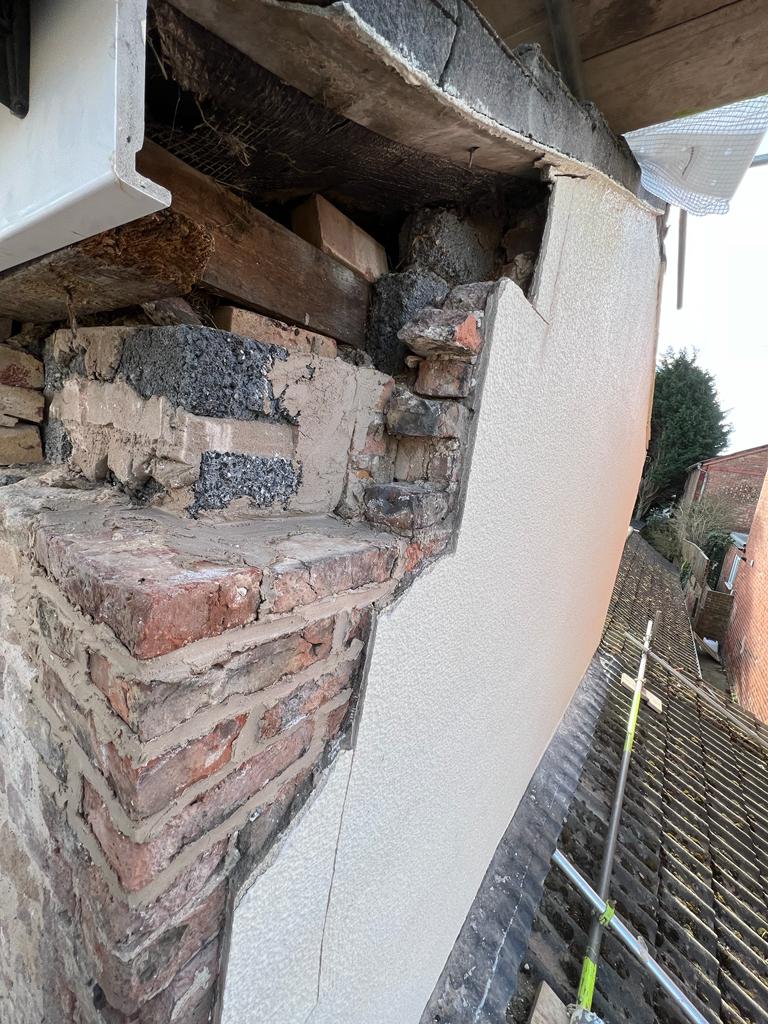
Unlike lime, cement-based render is dense and impermeable. It locks moisture into walls that were never designed to be sealed, creating an ideal environment for trapped damp and frost damage. It’s also inflexible, so as older buildings naturally settle or move with the seasons, cement can crack, break away, or take part of the masonry with it.
In essence, cement render often accelerates the very decay it was intended to prevent.
Should You Remove Existing Render?
Not every building needs its render removed – but if it’s cement-based and showing signs of failure, removal is usually the safest and most sustainable choice. Here’s how to decide.
Key Questions to Ask:
Is the render original?
If the render is lime-based and part of the building’s historic fabric, it may be better to repair than remove.
Is it trapping moisture?
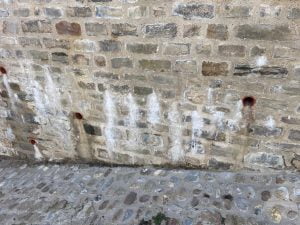
Tell-tale signs include flaking paint, crumbling stone, blown plaster inside, or damp smells in the property.
Is the render cracked, bulging, or hollow-sounding?
These are signs it has lost bond with the substrate – often because it’s too rigid or was poorly applied.
Is your property listed or in a conservation area?
You’ll need consent for removal or replacement, and heritage bodies usually favour lime render over cement. Every building is different, which is why we always recommend an on-site assessment before planning any render removal.

How Is Cement-Based Render Removed?
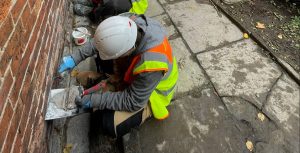
Removing render must be done carefully to avoid damaging the wall beneath. At The Yorkshire Lime Company, we use a combination of traditional and modern techniques to do this safely and efficiently.
Removal Methods:
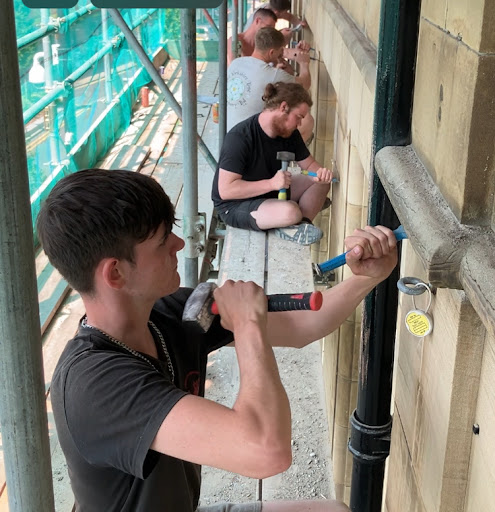
- Hand Tools – Hammers and chisels provide precise control, especially around delicate masonry. Labour-intensive but safest for soft stone or brick.
- Mechanical Tools – Carefully used grinders or needle guns can speed up removal on tougher substrates, but must be operated by trained hands.
- Superheated Water Systems (DOFF or Thermatech) – These use steam to break the bond between render and wall, minimising impact and avoiding harsh abrasion.
- Soda or Dry Ice Blasting – Effective for stubborn residues but not suitable for all buildings.
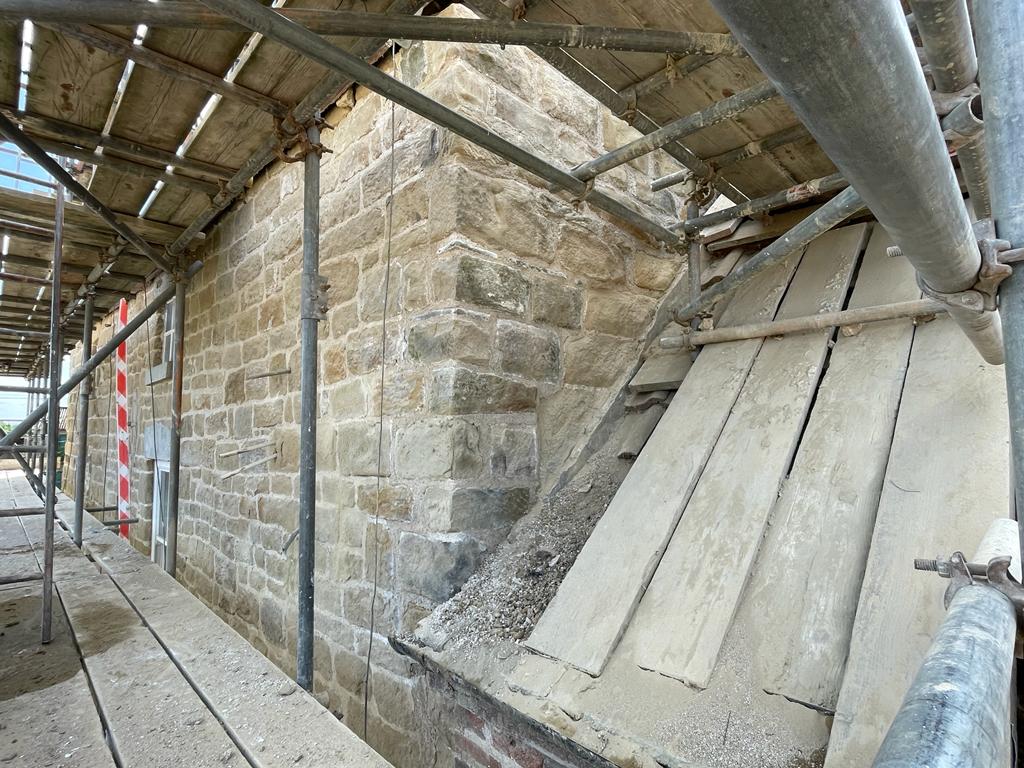
Once removed, the underlying masonry is inspected for damage, cleaned, and prepared for re-rendering if needed.
Why Choose Lime Render?
Lime render isn’t just a traditional choice – it’s a practical one. Especially for buildings built before 1919, it offers long-term benefits that cement can’t match.
Benefits of Lime Render:
Breathable: Moisture can evaporate freely, reducing the risk of trapped damp and mould.
Flexible: Accommodates subtle movement without cracking or detaching.
Repairable: Localised issues can be fixed without stripping the whole wall.
Reversible: If removed in future, lime won’t damage the surface underneath.
Environmentally Friendly: Produces far less carbon than cement during manufacture.
Visually Appropriate: Maintains the authentic character of historic buildings.
Whether you need a protective coat or a way to finish off repointed walls, lime render provides the breathability and resilience that older buildings need.


When Should You Re-Render?
Not all render needs to be replaced. But if your property is exposed to driving rain, wind, or frost, a breathable protective coat can make a major difference.
- Signs that re-rendering might be needed include:
- Surface water running down into walls
- Visible erosion of soft brick or stone
- Large patches of missing or loose render
- Walls that are no longer weather-resistant
At The Yorkshire Lime Company, we match every new render to your building’s specific needs. That includes selecting the right type of lime, the best aggregate blend, and the ideal finish – whether that’s coarse, fine, or ready for limewash.
Our Approach at The Yorkshire Lime Company
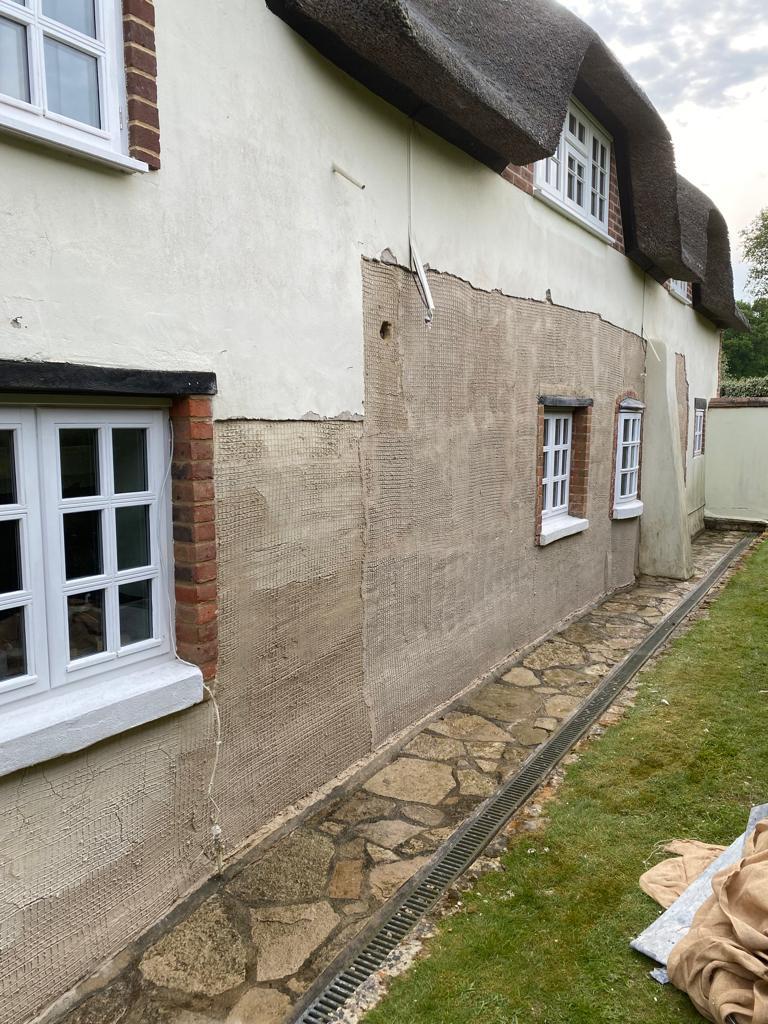
We specialise in sympathetic render removal and breathable lime re-rendering for heritage properties throughout Yorkshire. Our process starts with a full site assessment, where we identify existing materials, moisture risks, and structural concerns. We’ll never recommend removal unless it’s necessary – and we always use materials that match or complement the original construction.
Our work respects the building, the local architecture, and the practical needs of owners who want their properties to last.


Choosing What’s Right for Your Building
If you’re unsure whether your render is helping or harming your home, you’re not alone. Many owners of older properties inherit buildings with inappropriate cement coatings and don’t realise the damage until it’s too late.
Understanding your building’s materials – and how to care for them – is the first step in any responsible restoration. Removing cement render and switching to lime may seem like a big job, but it can save you from expensive structural repairs later. It also restores the breathability, comfort, and character your building was designed to have.
Speak to the Lime Specialists
Ready to find out if your render is right for your building? The Yorkshire Lime Company is here to help.
We offer honest, expert advice on render removal, lime re-rendering, and traditional finishes for historic buildings across Yorkshire. If you’re planning conservation work, restoring a period property, or simply want to futureproof your home the right way – we’d love to hear from you.
Contact us today to arrange a consultation or learn more about our render services. Let’s protect your property with the materials it was built for.